Image by: Knelstrom Media.
The market price of refusing the village fool
By Martin Foskett, Reporter
PUBLISHED:
UPDATED:
There exists a peculiar modern expectation that every opinion must be applauded, every feeling validated, and every public utterance wrapped in enough cushioning to survive a fall from a second-floor office block.
Against this backdrop, an old observation often attributed to Jean Cocteau arises. Being hated by idiots is the price paid for not becoming one of them. It is more an invoice than a quote.
The phenomenon can be observed almost anywhere. A council meeting. A corporate boardroom. A family WhatsApp group containing forty-three people and a photograph of a Labrador wearing a Christmas jumper. The pattern remains remarkably consistent.
A person expresses an inconvenient truth.
A crowd objects.
The truth remains standing.
The crowd begins drafting emotional paperwork.
Across Britain, entire industries now operate around the management of offence. Consultants discuss engagement strategies. Diversity officers produce colourful diagrams. Human resources departments circulate documents written in a dialect somewhere between legal warning and horoscope.
Meanwhile, the ordinary citizen attempting to state the obvious often discovers that reality has become an unpopular guest.
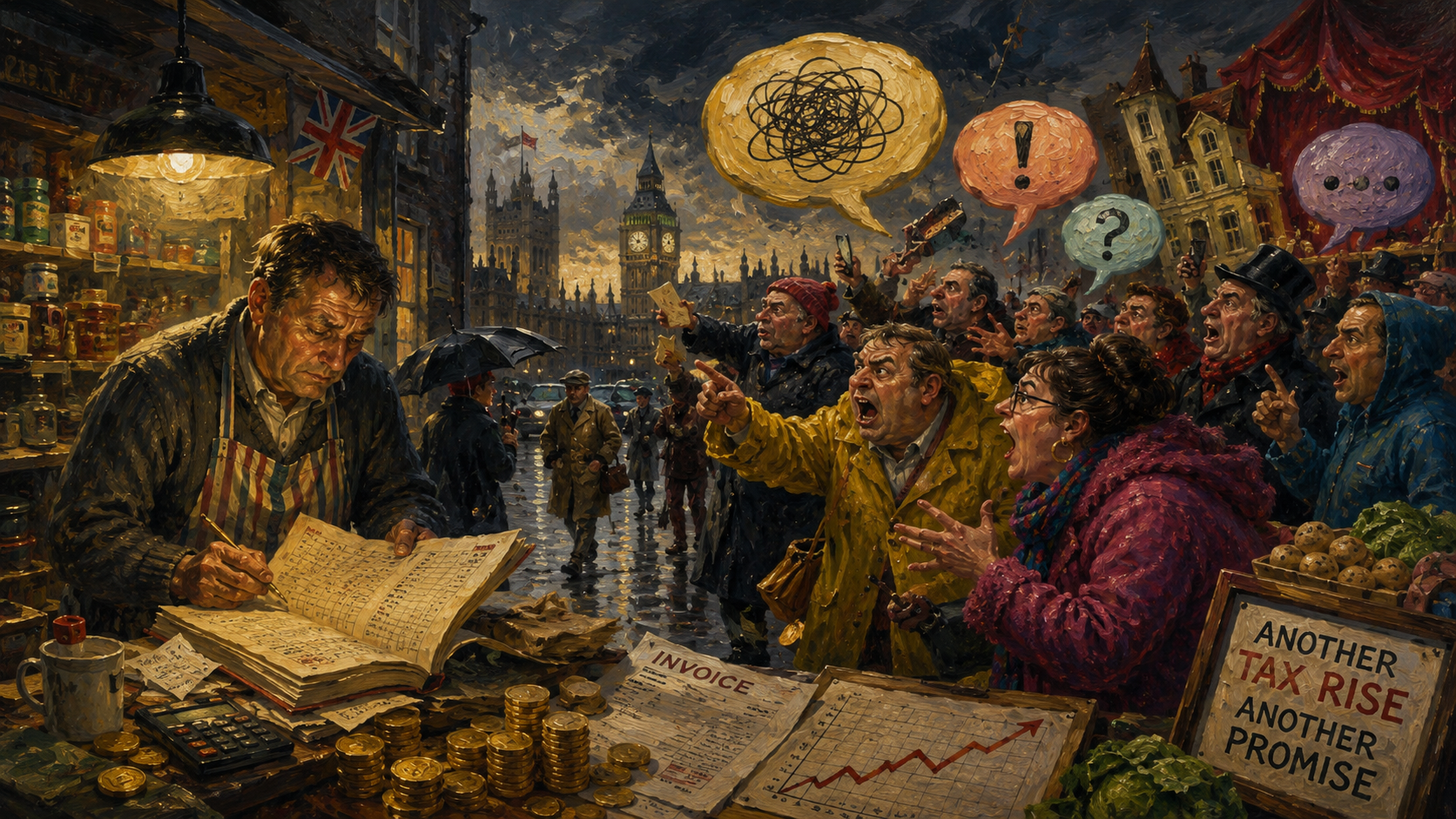
A shopkeeper complains about rising costs. An employer questions excessive regulation. A taxpayer wonders where the money has gone. These are not revolutionary acts. They are observations. Yet they frequently attract the same reaction once reserved for medieval witchcraft.
The village fool has acquired institutional backing.
In previous centuries, foolishness was constrained by practical limitations. A man announcing nonsense in the town square could be identified immediately. The pigeons would ignore him. The market traders would laugh. Life would continue.
Technology altered the arrangement.
Now the fool possesses a profile picture, a broadband connection and an audience large enough to occupy several football stadiums. The internet did not create stupidity. It merely upgraded its distribution network.
The result is a strange democratic illusion in which every opinion appears equal because it occupies identical screen space.
The economist and the conspiracy enthusiast each receive the same rectangular box.
The surgeon and the bloke convinced that pigeons are government surveillance devices each receive identical comment sections.
Reality remains stubbornly unequal, but presentation has become wonderfully misleading.
This creates tension for anyone unwilling to participate in collective nonsense.
Throughout history, progress has often depended upon individuals prepared to tolerate disapproval. Entrepreneurs, inventors, reformers and innovators rarely enjoyed unanimous support. Markets themselves operate through disagreement. Every successful business begins with somebody believing something that most people do not.
The corner shop owner opening before dawn is effectively making a wager against public indifference.
The investor backing an unproven idea is betting against conventional wisdom.
The engineer designing a better machine is quietly insulting the existing one.
Economic growth is, in many respects, organised disagreement.
This helps explain why societies obsessed with consensus frequently become stagnant. When approval becomes the highest social currency, independent thought becomes prohibitively expensive.
Nobody wishes to be shouted at.
Nobody enjoys becoming the subject of online outrage.
Nobody wakes up hoping to be described as problematic by somebody whose professional achievements consist largely of rearranging pronouns on social media profiles.
Yet the alternative is worse.
The alternative is intellectual surrender.
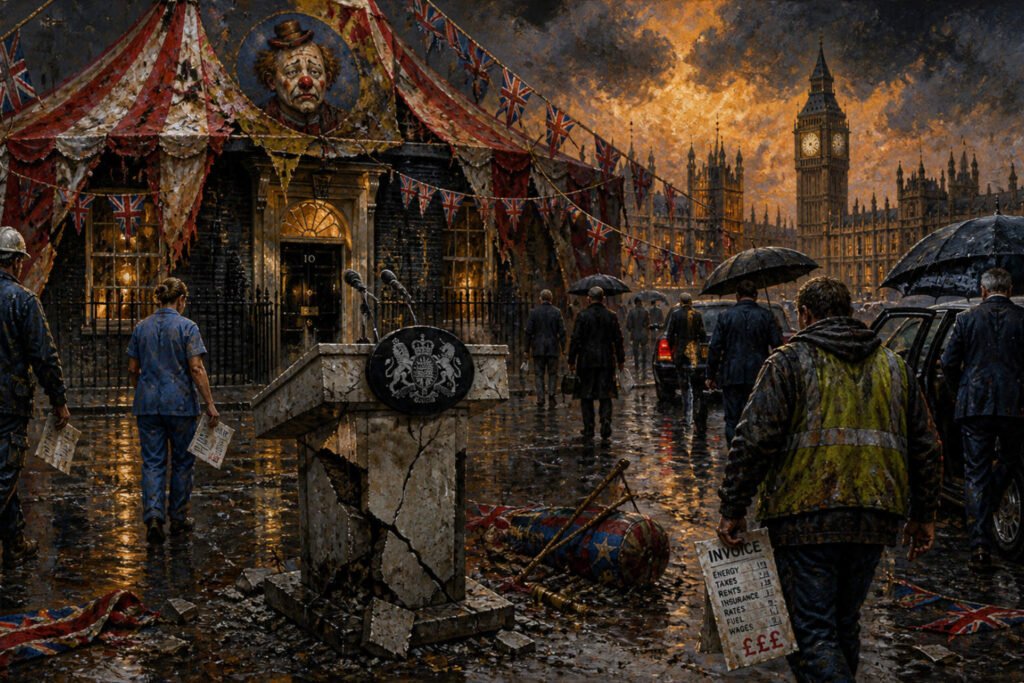
In parts of modern Britain, a curious social ritual has emerged. Entire conversations proceed without anybody stating what everybody already knows. Like amateur actors trapped in a poorly funded theatre production, participants recite approved lines while reality rattles the scenery backstage.
Housing shortages become planning challenges.
Tax rises become fiscal adjustments.
Declining services become transformation programmes.
Failure acquires an endless supply of aliases.
The language grows increasingly decorative while the underlying problem remains seated at the table eating biscuits.
Outside Westminster, ordinary life displays rather less enthusiasm for these linguistic gymnastics.
A builder in Essex, examining another rise in material costs, has little interest in ministerial phrasing.
A café owner confronted by electricity bills approaching orbital altitude tends to focus on arithmetic rather than communications strategy.
Numbers retain a brutal honesty.
They do not attend seminars.
They do not issue statements.
They simply exist.
This is perhaps why reality eventually defeats fashionable nonsense. Markets possess many flaws, but one admirable characteristic remains. They are astonishingly indifferent to feelings.
A business either attracts customers, or it does not.
A product either works or it does not.
An investment either generates returns, or it does not.
The spreadsheet rarely pauses for emotional reflection.
That indifference can appear harsh. It can also be remarkably healthy.
The same principle applies socially.
Being disliked by foolish people is often treated as evidence of failure. In practice, it may indicate the opposite.
History contains no shortage of examples.
The sensible employee who questioned a disastrous management decision.
The journalist who refused a fashionable narrative.
The entrepreneur who ignored expert predictions.
The scientist who challenged accepted wisdom.
The reformer who resisted prevailing opinion.
None received immediate applause.
Many received hostility.
Several received both.
Crowds have never possessed a flawless record of judgement.
The crowd once opposed railways.
The crowd opposed mechanisation.
The crowd opposed countless innovations now considered ordinary.
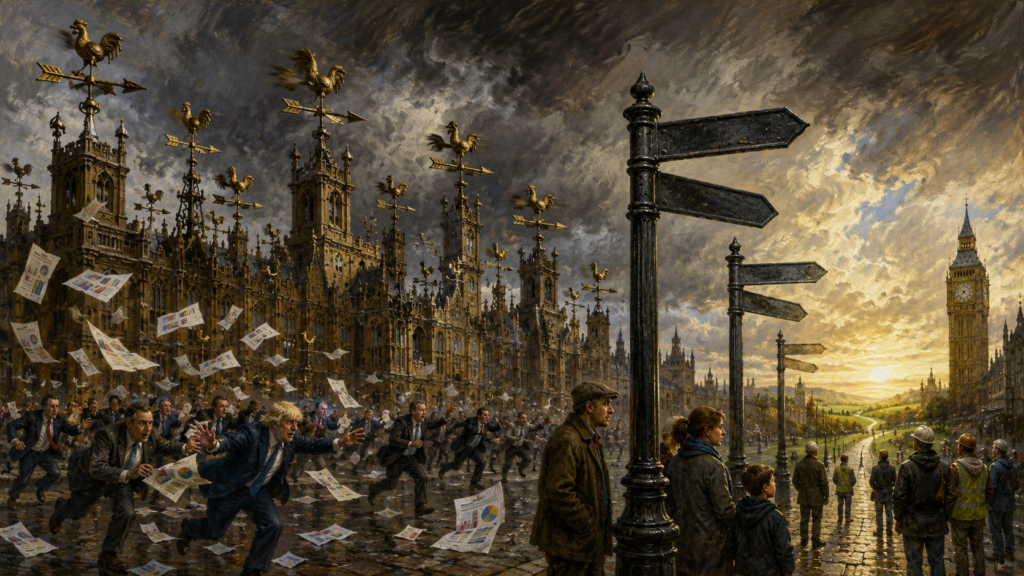
Public opinion resembles British weather. It changes rapidly and frequently denies responsibility for previous positions.
There is another uncomfortable reality hidden inside the quote.
Foolish people rarely recognise themselves.
The village idiot rarely carries a sign announcing the condition.
Confidence often increases as understanding declines.
Certainty flourishes where knowledge is absent.
This explains why genuinely thoughtful individuals frequently appear cautious while fools stride through life with the swagger of Roman emperors inspecting conquered territory.
Doubt requires intelligence.
Arrogance is considerably cheaper.
Modern institutions occasionally reward this imbalance. The loudest voice receives attention. The most dramatic claim attracts coverage. The most outraged participant dominates discussion.
Calm competence remains unfashionably quiet.
Yet competence continues doing the work.
Roads are repaired.
Businesses are opened.
Products are delivered.
Families are supported.
The practical machinery of civilisation operates largely because sensible people ignore fashionable hysteria and get on with things.
It is not glamorous.
Neither is plumbing.
Both remain essential.
The deeper lesson of the Cocteau quotation concerns independence. Not rebellion for its own sake. Not contrarianism as performance art. Simply the willingness to remain intellectually separate from collective foolishness when circumstances require.
That separation carries a cost.
Disapproval arrives.
Criticism appears.
The occasional social frost descends.
Yet the price remains modest compared with the alternative.
Becoming one of the fools requires surrendering judgement itself.
That is a far more expensive transaction.
As Britain stumbles through another decade of managerial jargon, online outrage and political theatre, the observation feels increasingly relevant.
Somewhere between the press releases, hashtags and strategic consultations, reality continues its stubborn march. It neither seeks permission nor requests approval.
Reality simply sends the bill.
Those unwilling to join the fools may discover that some people dislike them for it.
The evidence suggests that this is not a warning.
It is a receipt.
[adinserter name=”Block 1″]