
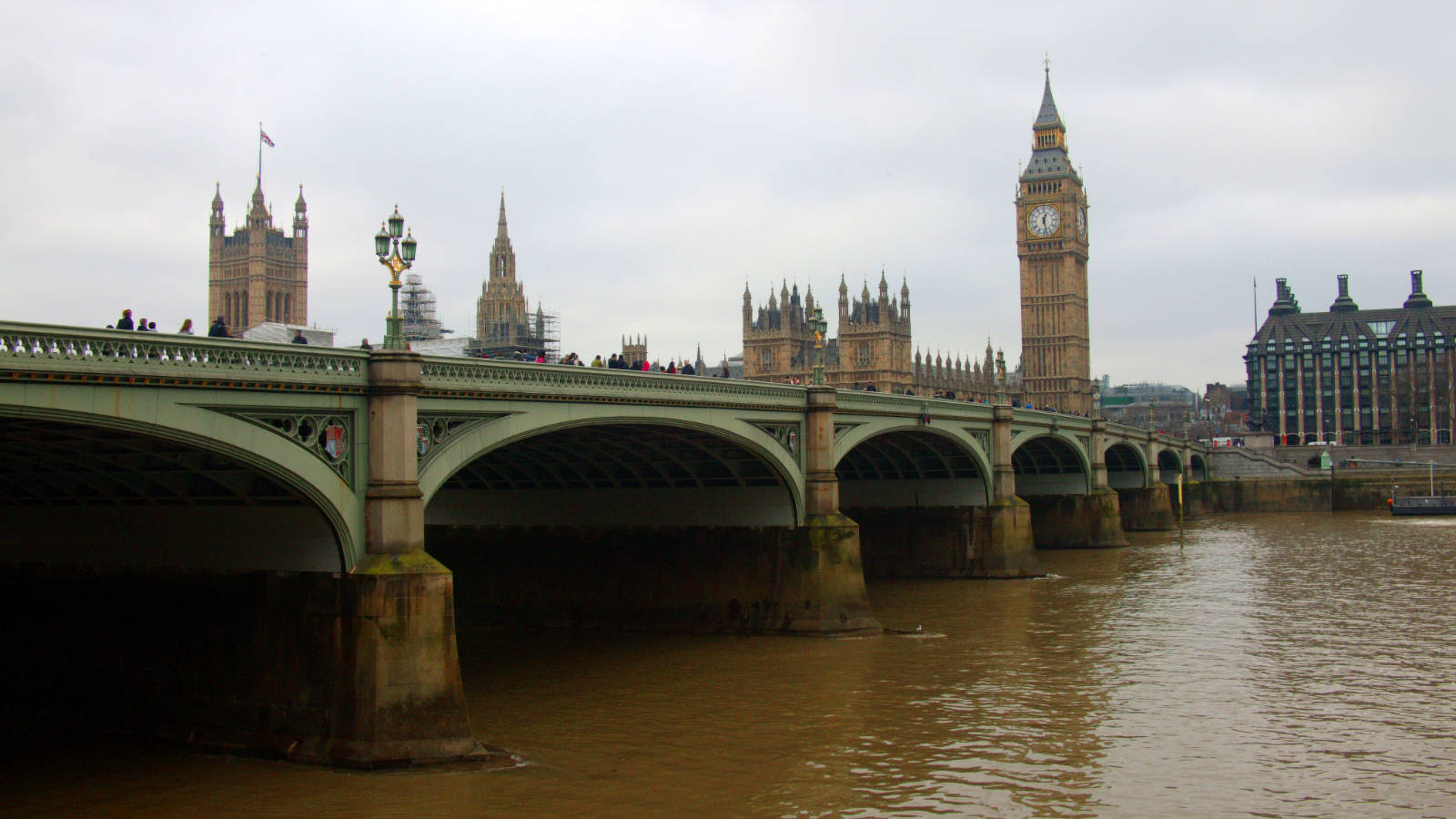
Image by Knelstrom Media.
STATE THREATS BILL WIDENS POWERS OVER HOSTILE BODIES
By Martin Foskett, Reporter
PUBLISHED:
UPDATED:
UNITED KINGDOM, London. The National Security State Threats Bill 2026 to 27 has returned to the Commons with Lords amendments after ministers moved to create a new designation regime for organisations involved in hostile foreign state activity.
The bill would allow the Home Secretary to designate bodies believed to be involved in foreign power threat activity when necessary to protect the safety or interests of the United Kingdom.
It would also create criminal offences for supporting, assisting, or receiving material benefit from a designated body. The most serious offences would carry maximum sentences of 14 years in prison.
A House of Commons Library briefing says the bill was introduced in the Commons on 9 June 2026 and was scheduled to have all Commons stages on 17 June. The government indicated that it wanted Parliament to expedite the bill because the powers should be available as soon as reasonably practicable.
That timetable means it is fair to describe the bill as being fast-tracked. Taking all Commons stages in one day is unusually quick by normal legislative standards. Critics may describe it as rushed through, while the government’s stated position is that the powers are urgently needed because of the current threat from hostile foreign state activity.
The bill fills a gap identified by the government between existing terrorism law and national security law. The National Security Act 2023 created offences covering espionage, sabotage, foreign interference and preparatory conduct linked to state threats. It did not create an equivalent to the proscription system used for terrorist organisations.
Under the Terrorism Act 2000, the Home Secretary can proscribe groups concerned in terrorism. The Commons Library briefing says those powers have not generally been used against state entities and that it is unclear whether such use would be legally permissible.
The new bill is designed for a different target. It is aimed at bodies acting for or linked to hostile foreign powers. These may include intelligence services, proxy organisations, and private bodies acting in support of foreign state threat activity.
MI5 defines state threats as overt or covert actions by foreign governments which fall short of direct armed conflict with the UK but go beyond peaceful diplomacy and expected statecraft. The Commons Library briefing says these can include espionage, sabotage, cyber operations, information campaigns and transnational repression.
The briefing also says MI5 has described the threat from foreign state activity as being as great as the threat from terrorism. It refers to an October 2025 update by MI5 Director General Ken McCallum, who said there had been a 35 per cent rise in the number of individuals investigated for involvement in state threat activity in the previous year.
The bill follows a review by Jonathan Hall KC, the Independent Reviewer of Terrorism and State Threat Legislation. His report considered whether counterterrorism tools could be emulated or adapted to address state threats. The Commons Library briefing says he concluded that terrorism proscription was not designed for state entities and recommended a parallel mechanism for foreign intelligence services and similar bodies.
The government has said the measure is needed because hostile state activity has changed in scale and form. The briefing identifies espionage, sabotage, cyber operations, foreign interference, information campaigns, and transnational repression as examples of the activities that ministers and security agencies are seeking to address.
The bill would allow designation when the Secretary of State reasonably believes that a body is, or has been, involved in foreign power threat activity and that such a designation is needed for UK safety or interests.
Designated bodies could be listed by name and by alias. Regulations would generally be subject to the affirmative procedure, requiring approval by both Houses of Parliament. In urgent cases, the affirmative procedure could be used, meaning regulations could take effect once signed by a minister, but would later require parliamentary approval.
The creation of this designation power is one of the bill’s main constitutional changes. It gives ministers the ability to identify bodies as threats through regulations, after which criminal liability may follow for those who support, assist or benefit from them.
The bill creates three principal offences.
The first is supporting a designated body for a purpose prejudicial to the interests of the UK. Examples include inviting support, expressing supportive views for a prohibited purpose, arranging supportive meetings, or speaking at those meetings.
The second is assisting a designated body. This could include conduct intended to materially assist a designated body with UK-related activity, or conduct likely to assist it, where the person knows, or ought to know, that this is the case.
The third is obtaining material benefit from a designated body or agreeing to receive such a benefit. Benefits could include money, gifts, contracts or valuable information.
The maximum sentence for supporting, assisting, or receiving benefits would be 14 years. Agreeing to receive benefits would carry a maximum sentence of ten years. These penalties broadly mirror the seriousness of equivalent offences under terrorism legislation.
The bill also applies to some conduct outside the UK. Where conduct takes place wholly overseas, the offences would generally apply only where there is a UK connection.
The Lords’ amendments add safeguards to Clause 2. They introduce protection for genuine humanitarian work, provided those activities are not carried out in breach of internationally recognised humanitarian principles and standards.
That change is intended to reduce the risk of unintended criminal liability for humanitarian organisations, medical charities, aid workers and international relief agencies operating in areas where designated bodies may be present.
The exemption is not unlimited. The Lords’ amendment states that humanitarian activity will not be protected where it is carried out in a manner contrary to internationally recognised humanitarian principles and standards.
The Lords also added a reasonable excuse defence where the alleged benefit consists of information, and the defendant had a reasonable excuse for conduct relating to that information.
That provision may be relevant to journalists, academics, researchers and others who handle information in legitimate contexts. It does not create a general exemption for all information-related conduct. It gives defendants a statutory route to argue that their conduct had a reasonable basis.
The bill contains other defences for conduct arising from legal obligations, public functions, legal work, and arrangements involving the UK or someone acting on its behalf. The Lords’ changes extend those safeguards in specified cases.
The measure has clear practical consequences for individuals, companies, universities and charities. Individuals who knowingly assist designated organisations could face serious criminal liability. Businesses operating internationally may need stronger due diligence checks to ensure they do not provide services, finance, logistics or technical support to designated bodies.
Sectors likely to face closer compliance demands include defence, finance, cybersecurity, telecommunications, shipping, higher education and research. Universities may need to review research partnerships, visiting academic arrangements, funding sources and technology transfer agreements.
Charities operating overseas may also face new legal risks. The Lords’ amendments protect legitimate humanitarian activity. However, aid groups would still need to ensure their work cannot reasonably be interpreted as assisting a designated body outside recognised humanitarian standards.
Ordinary members of the public are unlikely to encounter the legislation in daily life unless they knowingly engage with a designated organisation. A person reposting material from a designated body to endorse or invite support for it could face different legal questions than a person sharing the same material for criticism, research, or public-interest reporting.
The bill does not directly criminalise journalists. However, investigative reporters may sometimes contact organisations that governments consider hostile. Prosecutors and courts would need to consider whether conduct amounted to support, material assistance or legitimate reporting. The Lord’s information defence may be relevant where information is involved, and a reasonable excuse is shown.
Academic research would not automatically constitute support. Active collaboration that materially advanced a designated body’s activities could raise different questions. Universities and researchers are therefore likely to treat records, risk assessments and funding checks with more care than before. More paperwork, in other words, though not without a reason.
The bill includes an appeals process. A designated organisation or a person affected by designation may apply to the Secretary of State for removal. If refused, an appeal could be made to the Proscribed Organisations Appeal Commission, the same body that hears appeals relating to terrorism proscription.
If a designation or alias is removed after an appeal, a person convicted of an offence connected to that designation would be able to appeal. The court would be required to quash the conviction.
The Commons Library briefing links the bill to concern over Iran and hostile state activity in the UK. It cites the Intelligence and Security Committee’s July 2025 report, which found that Iran posed a wide-ranging and unpredictable threat to the UK. The committee said there had been at least 15 attempts to murder or kidnap British nationals and people living in the UK since the beginning of 2022 because of their opposition to Iran.
The briefing also refers to a March 2025 statement by then Security Minister Dan Jarvis, who said the UK had responded to 20 Iran-backed plots presenting potentially lethal threats to British citizens and UK residents since the start of 2022.
The bill engages civil liberties issues, including freedom of expression, freedom of association, fair trial rights and legal certainty. Potential areas of dispute include what counts as support, how far ministerial discretion should extend, and how the offences apply to journalists, academics, charities and political activity.
Supporters argue that broad powers are needed to respond to espionage, sabotage, cyberattacks, foreign interference, and activity by proxy organisations. Critics argue that broad concepts such as support, material assistance, and conduct prejudicial to the interests of the UK may create uncertainty for legitimate work.
The Lords’ amendments indicate that Parliament has recognised some of those concerns. They do not change the bill’s central purpose. They add protections intended to reduce unintended consequences for humanitarian activity and certain information-related conduct.
Future litigation is likely to test the meaning of support, material assistance, reasonable belief and reasonable excuse. Courts may also examine the proportionality of designation decisions and their compatibility with human rights protections.
The international effects may also be sensitive. Designating an organisation connected to a foreign government could create diplomatic tension, particularly where the body is closely linked to a state security service. The humanitarian amendments may help align the bill more closely with international humanitarian law, but disputes over interpretation remain possible.
The economic effects are likely to be mixed. Ministers may argue that the bill protects strategic industries and improves confidence by reducing exposure to hostile state activity. Businesses may face higher compliance costs, more legal checks, and greater due diligence obligations, particularly when operating across borders.
The practical burden will fall most heavily on bodies working in sensitive international contexts. That includes aid organisations, media groups, universities, research bodies, financial institutions and companies providing technology or specialist services.
The bill would extend to the whole of the UK and would come into force on the day it receives Royal Assent. The Commons will now consider the Lords’ amendments, including the humanitarian and information defences. The final impact of the legislation will depend on how ministers use the designation power, how prosecutors apply the offences, and how the courts interpret the safeguards.
[adinserter name=”Block 1″]