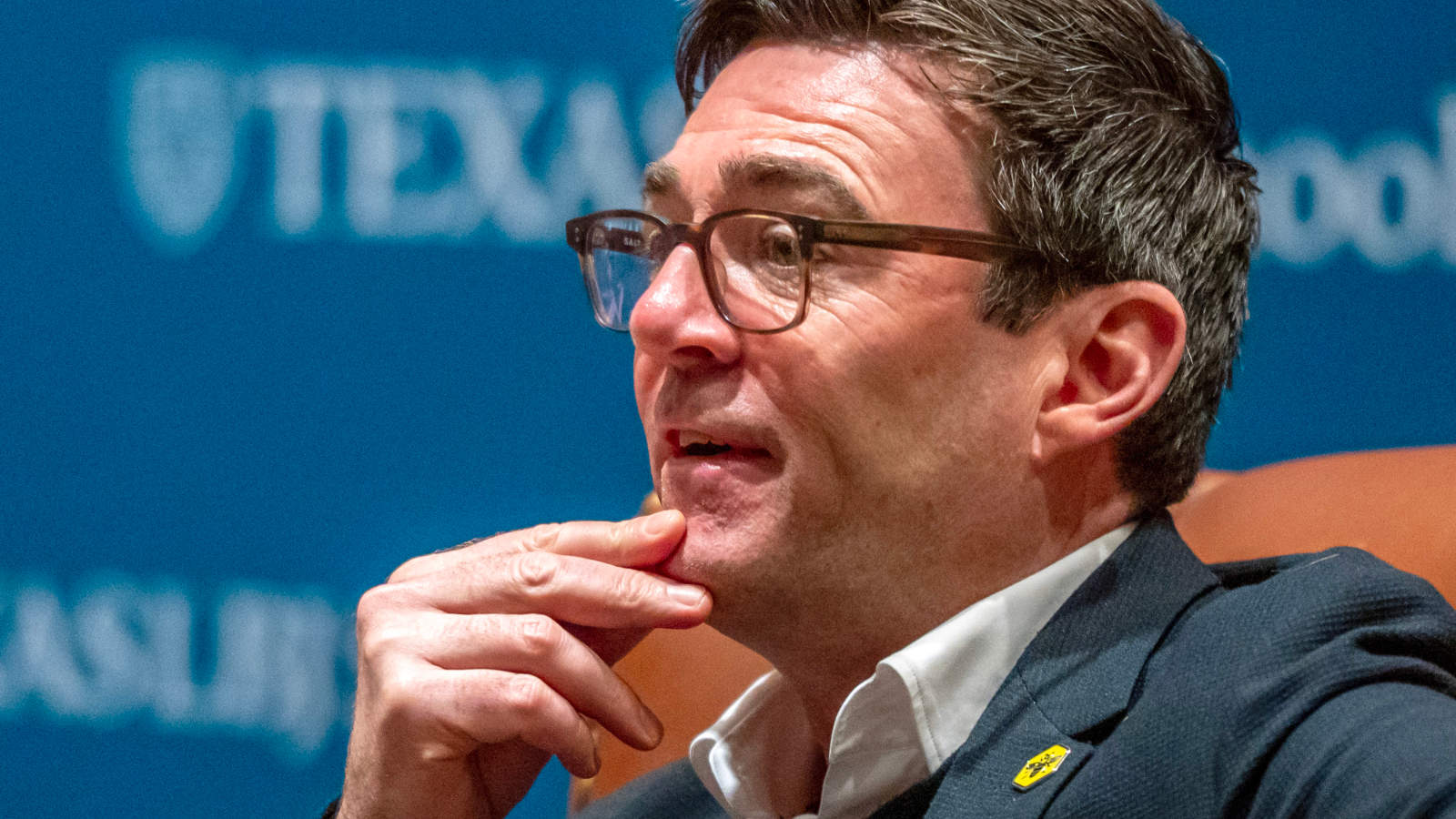
Image by: LBJ Library / Flickr.
LABOUR HOLDS MAKERFIELD AS BURNHAM RETURNS TO WESTMINSTER
By Martin Foskett, Reporter
PUBLISHED:
UPDATED:
UNITED KINGDOM, Makerfield. Andy Burnham has won the Makerfield by-election for Labour, securing 24,937 votes and 54.8 per cent of the vote in one of the most closely watched parliamentary contests in recent years. Turnout was reported at 58.75 per cent.
The result returns Burnham to Westminster after years as Mayor of Greater Manchester and is expected to intensify discussion about the Labour Party’s future direction. The contest had attracted national attention because Burnham’s return to Parliament was widely viewed as a potential precursor to a Labour leadership challenge.
The full result was:
- Labour, Andy Burnham: 24,937 (54.8%), up 6,725 votes
- Reform UK: 15,696 (34.5%), up 2,893 votes
- Restore Britain: 3,111 (6.8%), new
- Conservatives: 997 (2.2%), down 3,382 votes
- Greens: 308 (0.7%), down 1,468 votes
- Liberal Democrats: 163 (0.4%), down 2,572 votes
Compared with the 2024 general election, Labour increased both its vote total and vote share despite a strong challenge from Reform UK. Reform also advanced, although not sufficiently to overturn Labour’s advantage.
One of the most notable features of the result was the collapse of support for the Conservatives, Greens and Liberal Democrats.
Collectively, those parties lost several thousand votes compared with 2024, while Labour and Reform consolidated much of the contest into a two-party race.
The presence of Restore Britain also drew attention throughout the campaign. The party secured 6.8 per cent of the vote, a figure likely to prompt debate over whether it reduced Reform UK’s chances of mounting a stronger challenge. Several analysts had suggested before polling day that a split on the political right could benefit Labour.
Makerfield became one of the most scrutinised by-elections in modern British politics after former Labour MP Josh Simons resigned, creating an opportunity for Burnham to return to Parliament. Simons had argued that Burnham should have a route back to Westminster if he wished to seek Labour’s leadership, under party rules that require candidates to be MPs.
Throughout the campaign, senior Labour figures travelled to the constituency, while Reform UK sought to frame the contest as a test of public confidence in Sir Keir Starmer’s government. Polling suggested a close race during the final week, although Labour’s ground operation appeared extensive.
Burnham’s victory margin ultimately proved more comfortable than some forecasts had suggested. His share of the vote exceeded 50 per cent, giving Labour a clear win in a constituency that had become a symbol of wider political tensions across England’s former industrial areas.
For Reform UK, second place with more than a third of the vote will still be viewed as evidence of continued electoral strength. The party substantially improved on its previous performance and maintained pressure on Labour in a seat where concerns about living costs, immigration and public services featured prominently during campaigning.
Attention is now likely to turn to Westminster. Burnham’s return gives him a parliamentary platform at a time when Labour’s internal debate over leadership and strategy has become increasingly visible. Several Labour figures had openly discussed the possibility of a future leadership transition should Burnham secure the seat.
The immediate constitutional position remains unchanged. Sir Keir Starmer remains Prime Minister and Labour leader. However, Burnham’s victory ensures that speculation about Labour’s future direction is unlikely to disappear quickly.
Election officials confirmed turnout at 58.75 per cent. Counting concluded overnight, with Labour retaining the constituency and Andy Burnham elected as Member of Parliament for Makerfield.
[adinserter name=”Block 1″]