
Knelstrom Intelligence · World Factbook
Yemen
الجمهورية اليمنية
CapitalSanaa
Population41,773,878
GDP$21.6bn
Area455,503 km²
RegionMiddle East, North Africa, Afghanistan & Pakistan
Latest source check will run in the background.
Country facts
Overview
Background
The Kingdom of Yemen (colloquially known as North Yemen) became independent from the Ottoman Empire in 1918 and in 1962 became the Yemen Arab Republic. The British, who had set up a protectorate area around the southern port of Aden in the 19th century, withdrew in 1967 from what became the People's Republic of Southern Yemen (colloquially known as South Yemen). Three years later, the southern government adopted a Marxist orientation and changed the country's name to the People's Democratic Republic of Yemen. The exodus of hundreds of thousands of Yemenis from the south to the north contributed to two decades of hostility between the states, which were formally unified as the Republic of Yemen in 1990. A southern secessionist movement and brief civil war in 1994 was quickly subdued. In 2000, Saudi Arabia and Yemen agreed to delineate their border. Fighting in the northwest between the government and the Houthis, a Zaydi Shia Muslim minority, continued intermittently from 2004 to 2010, and then again from 2014 to the present. The southern secessionist movement was revitalized in 2007.
Public rallies in Sana'a against then President Ali Abdallah SALIH -- inspired by similar Arab Spring demonstrations in Tunisia and Egypt -- slowly gained momentum in 2011, fueled by complaints over high unemployment, poor economic conditions, and corruption. Some protests resulted in violence, and the demonstrations spread to other major cities. The Gulf Cooperation Council (GCC) mediated the crisis with the GCC Initiative, an agreement in which the president would step down in exchange for immunity from prosecution. SALIH eventually agreed to step down and transfer some powers to Vice President Abd Rabuh Mansur HADI. After HADI's uncontested election victory in 2012, SALIH formally transferred all presidential powers. In accordance with the GCC Initiative, Yemen launched a National Dialogue Conference (NDC) in 2013 to discuss key constitutional, political, and social issues. HADI concluded the NDC in 2014 and planned to proceed with constitutional drafting, a constitutional referendum, and national elections.
The Houthis, perceiving their grievances were not addressed in the NDC, joined forces with SALIH and expanded their influence in northwestern Yemen, which culminated in a major offensive against military units and rival tribes and enabled their forces to overrun the capital, Sana'a, in 2014. In 2015, the Houthis surrounded key government facilities, prompting HADI and the cabinet to resign. HADI fled first to Aden -- where he rescinded his resignation -- and then to Oman before moving to Saudi Arabia and asking the GCC to intervene militarily in Yemen. Saudi Arabia assembled a coalition of Arab militaries and began airstrikes, and ground fighting continued through 2016. In 2016, the UN initiated peace talks that ended without agreement. Rising tensions between the Houthis and SALIH culminated in Houthi forces killing SALIH. In 2018, the Houthis and the Yemeni Government participated in UN-brokered peace talks, agreeing to a limited cease-fire and the establishment of a UN mission.
In 2019, Yemen’s parliament convened for the first time since the conflict broke out in 2014. Violence then erupted between HADI's government and the pro-secessionist Southern Transitional Council (STC) in southern Yemen. HADI's government and the STC signed a power-sharing agreement to end the fighting, and in 2020, the signatories formed a new cabinet. In 2020 and 2021, fighting continued as the Houthis gained territory and also conducted regular UAV and missile attacks against targets in Saudi Arabia. In 2022, the UN brokered a temporary truce between the Houthis and the Saudi-led coalition. HADI and his vice-president resigned and were replaced by an eight-person Presidential Leadership Council. Although the truce formally expired in 2022, the parties nonetheless refrained from large-scale conflict through the end of 2023. Saudi Arabia, after the truce expired, continued to negotiate with the Yemeni Government and Houthis on a roadmap agreement that would include a permanent ceasefire and a peace process under UN auspices.
Reference: 2023, 2022, 2021, 2020Public rallies in Sana'a against then President Ali Abdallah SALIH -- inspired by similar Arab Spring demonstrations in Tunisia and Egypt -- slowly gained momentum in 2011, fueled by complaints over high unemployment, poor economic conditions, and corruption. Some protests resulted in violence, and the demonstrations spread to other major cities. The Gulf Cooperation Council (GCC) mediated the crisis with the GCC Initiative, an agreement in which the president would step down in exchange for immunity from prosecution. SALIH eventually agreed to step down and transfer some powers to Vice President Abd Rabuh Mansur HADI. After HADI's uncontested election victory in 2012, SALIH formally transferred all presidential powers. In accordance with the GCC Initiative, Yemen launched a National Dialogue Conference (NDC) in 2013 to discuss key constitutional, political, and social issues. HADI concluded the NDC in 2014 and planned to proceed with constitutional drafting, a constitutional referendum, and national elections.
The Houthis, perceiving their grievances were not addressed in the NDC, joined forces with SALIH and expanded their influence in northwestern Yemen, which culminated in a major offensive against military units and rival tribes and enabled their forces to overrun the capital, Sana'a, in 2014. In 2015, the Houthis surrounded key government facilities, prompting HADI and the cabinet to resign. HADI fled first to Aden -- where he rescinded his resignation -- and then to Oman before moving to Saudi Arabia and asking the GCC to intervene militarily in Yemen. Saudi Arabia assembled a coalition of Arab militaries and began airstrikes, and ground fighting continued through 2016. In 2016, the UN initiated peace talks that ended without agreement. Rising tensions between the Houthis and SALIH culminated in Houthi forces killing SALIH. In 2018, the Houthis and the Yemeni Government participated in UN-brokered peace talks, agreeing to a limited cease-fire and the establishment of a UN mission.
In 2019, Yemen’s parliament convened for the first time since the conflict broke out in 2014. Violence then erupted between HADI's government and the pro-secessionist Southern Transitional Council (STC) in southern Yemen. HADI's government and the STC signed a power-sharing agreement to end the fighting, and in 2020, the signatories formed a new cabinet. In 2020 and 2021, fighting continued as the Houthis gained territory and also conducted regular UAV and missile attacks against targets in Saudi Arabia. In 2022, the UN brokered a temporary truce between the Houthis and the Saudi-led coalition. HADI and his vice-president resigned and were replaced by an eight-person Presidential Leadership Council. Although the truce formally expired in 2022, the parties nonetheless refrained from large-scale conflict through the end of 2023. Saudi Arabia, after the truce expired, continued to negotiate with the Yemeni Government and Houthis on a roadmap agreement that would include a permanent ceasefire and a peace process under UN auspices.
Geography
Location
Middle East, bordering the Arabian Sea, Gulf of Aden, and Red Sea, between Oman and Saudi Arabia
Geographic coordinates
15 00 N, 48 00 E
Map references
Middle East
Area
total: 527,968 sq km
land: 527,968 sq km
water: 0 sq km
note: note: includes Perim, Socotra, the former Yemen Arab Republic (YAR or North Yemen), and the former People's Democratic Republic of Yemen (PDRY or South Yemen)
land: 527,968 sq km
water: 0 sq km
note: note: includes Perim, Socotra, the former Yemen Arab Republic (YAR or North Yemen), and the former People's Democratic Republic of Yemen (PDRY or South Yemen)
Area - comparative
almost four times the size of Alabama; slightly larger than twice the size of Wyoming
Land boundaries
total: 1,601 km
border countries: Oman 294 km; Saudi Arabia 1,307 km
border countries: Oman 294 km; Saudi Arabia 1,307 km
Coastline
1,906 km
Maritime claims
territorial sea: 12 nm
contiguous zone: 24 nm
exclusive economic zone: 200 nm
continental shelf: 200 nm or to the edge of the continental margin
contiguous zone: 24 nm
exclusive economic zone: 200 nm
continental shelf: 200 nm or to the edge of the continental margin
Climate
mostly desert; hot and humid along west coast; temperate in western mountains affected by seasonal monsoon; extraordinarily hot, dry, harsh desert in east
Terrain
narrow coastal plain backed by flat-topped hills and rugged mountains; dissected upland desert plains in center slope into the desert interior of the Arabian Peninsula
Elevation
highest point: Jabal an Nabi Shu'ayb 3,666 m
lowest point: Arabian Sea 0 m
mean elevation: 999 m
lowest point: Arabian Sea 0 m
mean elevation: 999 m
Natural resources
petroleum, fish, rock salt, marble; small deposits of coal, gold, lead, nickel, and copper; fertile soil in west
Land use
agricultural land: 44.4% (2023 est.)
agricultural land: arable land: arable land: 2.2% (2023 est.)
agricultural land: permanent crops: permanent crops: 0.6% (2023 est.)
agricultural land: permanent pasture: permanent pasture: 41.7% (2023 est.)
forest: 1% (2023 est.)
other: 54.5% (2023 est.)
Reference: 2023agricultural land: arable land: arable land: 2.2% (2023 est.)
agricultural land: permanent crops: permanent crops: 0.6% (2023 est.)
agricultural land: permanent pasture: permanent pasture: 41.7% (2023 est.)
forest: 1% (2023 est.)
other: 54.5% (2023 est.)
Irrigated land
6,800 sq km (2012)
Reference: 2012Population distribution
the vast majority of the population is found in the Asir Mountains (part of the larger Sarawat Mountain system), located in the far western region of the country
Natural hazards
sandstorms and dust storms in summer
volcanism: limited volcanic activity; Jebel at Tair (Jabal al-Tair, Jebel Teir, Jabal al-Tayr, Jazirat at-Tair) (244 m), which forms an island in the Red Sea, became active in 2007; other historically active volcanoes include Harra of Arhab, Harras of Dhamar, Harra es-Sawad, and Jebel Zubair, although many of these have not erupted in over a century
Reference: 2007volcanism: limited volcanic activity; Jebel at Tair (Jabal al-Tair, Jebel Teir, Jabal al-Tayr, Jazirat at-Tair) (244 m), which forms an island in the Red Sea, became active in 2007; other historically active volcanoes include Harra of Arhab, Harras of Dhamar, Harra es-Sawad, and Jebel Zubair, although many of these have not erupted in over a century
Geography - note
strategic location on Bab el Mandeb, the strait linking the Red Sea and the Gulf of Aden and one of world's most active shipping lanes
Population & Society
Nationality
noun: Yemeni(s)
adjective: Yemeni
adjective: Yemeni
Ethnic groups
predominantly Arab; but also Afro-Arab, South Asian, European
Languages
Languages: Arabic (official)
major-language sample(s): كتاب حقائق العالم، المصدر الذي لا يمكن الاستغناء عنه للمعلومات الأساسية (Arabic)
The World Factbook, the indispensable source for basic information.
note: note: a distinct Socotri language is widely used on Socotra Island and Archipelago; Mahri is still fairly widely spoken in eastern Yemen
major-language sample(s): كتاب حقائق العالم، المصدر الذي لا يمكن الاستغناء عنه للمعلومات الأساسية (Arabic)
The World Factbook, the indispensable source for basic information.
note: note: a distinct Socotri language is widely used on Socotra Island and Archipelago; Mahri is still fairly widely spoken in eastern Yemen
Religions
Muslim 99.1% (official; virtually all are citizens, an estimated 65% are Sunni and 35% are Shia), other 0.9% (includes Jewish, Baha'i, Hindu, and Christian; many are refugees or temporary foreign residents) (2020 est.)
Reference: 2020Age structure
0-14 years: 34.4% (male 5,622,998/female 5,430,285)
15-64 years: 62.2% (male 10,112,603/female 9,865,805)
65 years and over: 3.4% (2024 est.) (male 485,538/female 623,214)
Reference: 202415-64 years: 62.2% (male 10,112,603/female 9,865,805)
65 years and over: 3.4% (2024 est.) (male 485,538/female 623,214)
Dependency ratios
total dependency ratio: 71.3 (2024 est.)
youth dependency ratio: 66 (2024 est.)
elderly dependency ratio: 5.4 (2024 est.)
potential support ratio: 18.6 (2024 est.)
Reference: 2024youth dependency ratio: 66 (2024 est.)
elderly dependency ratio: 5.4 (2024 est.)
potential support ratio: 18.6 (2024 est.)
Median age
total: 22 years (2024 est.)
male: 21.9 years
female: 22.2 years
Reference: 2024male: 21.9 years
female: 22.2 years
Population growth rate
1.78% (2024 est.)
Reference: 2024Birth rate
23.4 births/1,000 population (2024 est.)
Reference: 2024Death rate
5.5 deaths/1,000 population (2024 est.)
Reference: 2024Net migration rate
-0.2 migrant(s)/1,000 population (2024 est.)
Reference: 2024Population distribution
the vast majority of the population is found in the Asir Mountains (part of the larger Sarawat Mountain system), located in the far western region of the country
Major urban areas - population
3.292 million SANAA (capital), 1.080 million Aden, 941,000 Taiz, 772,000 Ibb (2023)
Reference: 2023Sex ratio
at birth: 1.05 male(s)/female
0-14 years: 1.04 male(s)/female
15-64 years: 1.03 male(s)/female
65 years and over: 0.78 male(s)/female
total population: 1.02 male(s)/female (2024 est.)
Reference: 20240-14 years: 1.04 male(s)/female
15-64 years: 1.03 male(s)/female
65 years and over: 0.78 male(s)/female
total population: 1.02 male(s)/female (2024 est.)
Mother's mean age at first birth
20.8 years (2013 est.)
note: note: data represents median age at first birth among women 25-49
Reference: 2013note: note: data represents median age at first birth among women 25-49
Maternal mortality ratio
118 deaths/100,000 live births (2023 est.)
Reference: 2023Gross reproduction rate
1.37 (2024 est.)
Reference: 2024Drinking water source
improved: urban: urban: 77.2% of population (2022 est.)
improved: rural: rural: 51.8% of population (2022 est.)
improved: total: total: 61.8% of population (2022 est.)
unimproved: urban: urban: 22.8% of population (2022 est.)
unimproved: rural: rural: 48.2% of population (2022 est.)
unimproved: total: total: 38.2% of population (2022 est.)
Reference: 2022improved: rural: rural: 51.8% of population (2022 est.)
improved: total: total: 61.8% of population (2022 est.)
unimproved: urban: urban: 22.8% of population (2022 est.)
unimproved: rural: rural: 48.2% of population (2022 est.)
unimproved: total: total: 38.2% of population (2022 est.)
Health expenditure
Health expenditure (as % of GDP): 4.3% of GDP (2015)
Health expenditure (as % of national budget): 2.5% of national budget (2022 est.)
Reference: 2022, 2015Health expenditure (as % of national budget): 2.5% of national budget (2022 est.)
Physician density
0.1 physicians/1,000 population (2023)
Reference: 2023Sanitation facility access
improved: urban: urban: 83.1% of population (2022 est.)
improved: rural: rural: 44.8% of population (2022 est.)
improved: total: total: 59.9% of population (2022 est.)
unimproved: urban: urban: 16.9% of population (2022 est.)
unimproved: rural: rural: 55.2% of population (2022 est.)
unimproved: total: total: 40.1% of population (2022 est.)
Reference: 2022improved: rural: rural: 44.8% of population (2022 est.)
improved: total: total: 59.9% of population (2022 est.)
unimproved: urban: urban: 16.9% of population (2022 est.)
unimproved: rural: rural: 55.2% of population (2022 est.)
unimproved: total: total: 40.1% of population (2022 est.)
Obesity - adult prevalence rate
17.1% (2016)
Reference: 2016Alcohol consumption per capita
total: 0.02 liters of pure alcohol (2019 est.)
beer: 0.02 liters of pure alcohol (2019 est.)
wine: 0 liters of pure alcohol (2019 est.)
spirits: 0 liters of pure alcohol (2019 est.)
other alcohols: 0 liters of pure alcohol (2019 est.)
Reference: 2019beer: 0.02 liters of pure alcohol (2019 est.)
wine: 0 liters of pure alcohol (2019 est.)
spirits: 0 liters of pure alcohol (2019 est.)
other alcohols: 0 liters of pure alcohol (2019 est.)
Tobacco use
total: 20.2% (2025 est.)
male: 33.1% (2025 est.)
female: 7.3% (2025 est.)
male: 33.1% (2025 est.)
female: 7.3% (2025 est.)
Children under the age of 5 years underweight
40.7% (2022 est.)
Reference: 2022Currently married women (ages 15-49)
60.4% (2023 est.)
Reference: 2023Child marriage
women married by age 15: 6.5% (2023)
women married by age 18: 29.6% (2023)
Reference: 2023women married by age 18: 29.6% (2023)
Literacy
female: 54.1% (2023 est.)
Reference: 2023Migration & Displacement
Immigrant/emigrant stock measures the number of international migrants resident in, or originating from, the country; it is not the same as annual immigration/emigration flows.
Net migration rate
-0.2 migrant(s)/1,000 population (2024 est.)
Reference: 2024Refugees and internally displaced persons
refugees: 60,921 (2024 est.)
IDPs: 4,795,983 (2024 est.)
Reference: 2024IDPs: 4,795,983 (2024 est.)
Government & Politics
| Office | Holder | Affiliation | From | Status | Evidence |
|---|---|---|---|---|---|
| Head of government | Salem Saleh bin Braik | — | 2025-05-03 | Current | Reported |
| Head of state | Rashad al-Alimi | — | 2022-04-07 | Current | Reported |
Country name
conventional long form: Republic of Yemen
conventional short form: Yemen
local long form: Al Jumhuriyah al Yamaniyah
local short form: Al Yaman
former: Yemen Arab Republic [Yemen (Sanaa) or North Yemen] and People's Democratic Republic of Yemen [Yemen (Aden) or South Yemen]
etymology: the name origin is unclear but may come from the Arabic word al-yamin, meaning "the right," as a reference to its geographic position in relation to Mecca
conventional short form: Yemen
local long form: Al Jumhuriyah al Yamaniyah
local short form: Al Yaman
former: Yemen Arab Republic [Yemen (Sanaa) or North Yemen] and People's Democratic Republic of Yemen [Yemen (Aden) or South Yemen]
etymology: the name origin is unclear but may come from the Arabic word al-yamin, meaning "the right," as a reference to its geographic position in relation to Mecca
Capital
name: Sanaa
geographic coordinates: 15 21 N, 44 12 E
time difference: UTC+3 (8 hours ahead of Washington, DC, during Standard Time)
etymology: the name is reputed to mean "fortified place" in an ancient language
geographic coordinates: 15 21 N, 44 12 E
time difference: UTC+3 (8 hours ahead of Washington, DC, during Standard Time)
etymology: the name is reputed to mean "fortified place" in an ancient language
Administrative divisions
22 governorates (muhafazat, singular - muhafazah); Abyan, 'Adan (Aden), Ad Dali', Al Bayda', Al Hudaydah, Al Jawf, Al Mahrah, Al Mahwit, Amanat al 'Asimah (Sanaa City), 'Amran, Arkhabil Suqutra (Socotra Archipelago), Dhamar, Hadramawt, Hajjah, Ibb, Lahij, Ma'rib, Raymah, Sa'dah, San'a' (Sanaa), Shabwah, Ta'izz
Legal system
mixed system of Islamic (sharia) law, Napoleonic law, English common law, and customary law
Constitution
history: adopted by referendum 16 May 1991 (following unification)
Reference: 1991International law organization participation
has not submitted an ICJ jurisdiction declaration; non-party state to the ICCt
Citizenship
citizenship by birth: no
citizenship by descent only: the father must be a citizen of Yemen; if the father is unknown, the mother must be a citizen
dual citizenship recognized: no
residency requirement for naturalization: 10 years
citizenship by descent only: the father must be a citizen of Yemen; if the father is unknown, the mother must be a citizen
dual citizenship recognized: no
residency requirement for naturalization: 10 years
Suffrage
18 years of age; universal
Executive branch
chief of state: Presidential Leadership Council Chairperson Dr. Rashad Muhammad al-ALIMI (since 19 April 2022)
head of government: Prime Minister Salim Salih BIN BURAYK (since 9 May 2025)
cabinet: 24 members from northern and southern Yemen, with representatives from Yemen's major political parties
election/appointment process: formerly, the president was directly elected by absolute-majority popular vote in 2 rounds, if needed, for a 7-year term (eligible for a second term); vice president appointed by the president; prime minister appointed by the president
most recent election date: 21 February 2012
election results: 2012: Abd Rabuh Mansur HADI (GPC) elected consensus president
note: note: on 7 April 2022, President Abd Rabuh Mansur HADI announced his abdication, the dismissal of Vice President ALI MUHSIN al-Ahmar and the formation of a Presidential Leadership Council, an eight-member body chaired by former minister Rashad AL-ALIMI; on 19 April 2022, the Council was sworn in before Parliament and began assuming the responsibilities of the president and vice president and carrying out the political, security, and military duties of the government; in May 2025, Chairperson al-ALIMI made changes to his cabinet
Reference: 2025, 2022, 2012head of government: Prime Minister Salim Salih BIN BURAYK (since 9 May 2025)
cabinet: 24 members from northern and southern Yemen, with representatives from Yemen's major political parties
election/appointment process: formerly, the president was directly elected by absolute-majority popular vote in 2 rounds, if needed, for a 7-year term (eligible for a second term); vice president appointed by the president; prime minister appointed by the president
most recent election date: 21 February 2012
election results: 2012: Abd Rabuh Mansur HADI (GPC) elected consensus president
note: note: on 7 April 2022, President Abd Rabuh Mansur HADI announced his abdication, the dismissal of Vice President ALI MUHSIN al-Ahmar and the formation of a Presidential Leadership Council, an eight-member body chaired by former minister Rashad AL-ALIMI; on 19 April 2022, the Council was sworn in before Parliament and began assuming the responsibilities of the president and vice president and carrying out the political, security, and military duties of the government; in May 2025, Chairperson al-ALIMI made changes to his cabinet
Legislative branch
legislature name: Parliament (Majlis)
legislative structure: bicameral
note: note: the last legislative election occurred in 2003, and the six-year term for the House of Representatives expired in 2009. Ongoing instability, beginning in 2011, has since prevented new elections. A new Shura Council was appointed in 2021 and is currently chaired by Dr. Ahmed Obaid bin Dagher (as of Jan 2025).
Reference: 2025, 2021, 2011, 2009legislative structure: bicameral
note: note: the last legislative election occurred in 2003, and the six-year term for the House of Representatives expired in 2009. Ongoing instability, beginning in 2011, has since prevented new elections. A new Shura Council was appointed in 2021 and is currently chaired by Dr. Ahmed Obaid bin Dagher (as of Jan 2025).
Legislative branch - lower chamber
chamber name: House of Representatives (Majlis Annowab)
number of seats: 301 (all directly elected)
electoral system: plurality/majority
scope of elections: full renewal
term in office: 6 years
most recent election date: 4/27/2003
parties elected and seats per party: General People's Congress (GPC) (238); Yemeni Congregation for Reform (Islah) (46); Other (17)
percentage of women in chamber: 0%
Reference: 2003number of seats: 301 (all directly elected)
electoral system: plurality/majority
scope of elections: full renewal
term in office: 6 years
most recent election date: 4/27/2003
parties elected and seats per party: General People's Congress (GPC) (238); Yemeni Congregation for Reform (Islah) (46); Other (17)
percentage of women in chamber: 0%
Legislative branch - upper chamber
chamber name: Shura Council (Majlis Alshoora)
number of seats: 111 (all appointed)
scope of elections: full renewal
most recent election date: 4/28/2001
percentage of women in chamber: 1.1%
note: note: the Shura Council serves in an advisory role to the president; it has no legislative responsibilities
Reference: 2001number of seats: 111 (all appointed)
scope of elections: full renewal
most recent election date: 4/28/2001
percentage of women in chamber: 1.1%
note: note: the Shura Council serves in an advisory role to the president; it has no legislative responsibilities
Judicial branch
highest court(s): Supreme Court (consists of the court president, 2 deputies, and nearly 50 judges; court organized into constitutional, civil, commercial, family, administrative, criminal, military, and appeals scrutiny divisions)
judge selection and term of office: judges appointed by the Supreme Judicial Council, which is chaired by the president of the republic and includes 10 high-ranking judicial officers; judges serve for life with mandatory retirement at age 65
subordinate courts: appeal courts; district or first instance courts; commercial courts
judge selection and term of office: judges appointed by the Supreme Judicial Council, which is chaired by the president of the republic and includes 10 high-ranking judicial officers; judges serve for life with mandatory retirement at age 65
subordinate courts: appeal courts; district or first instance courts; commercial courts
Political parties
General People’s Congress or GPC (3 factions: pro-Hadi, pro-Houthi, pro-Salih)
Nasserist Unionist People's Organization
National Arab Socialist Ba'ath Party
Southern Transitional Council or STC
Yemeni Reform Grouping or Islah
Yemeni Socialist Party or YSP
Nasserist Unionist People's Organization
National Arab Socialist Ba'ath Party
Southern Transitional Council or STC
Yemeni Reform Grouping or Islah
Yemeni Socialist Party or YSP
Diplomatic representation in the US
chief of mission: Ambassador Abdulwahab Abdullah Ahmed AL-HAJRI (since 24 July 2025)
chancery: 2319 Wyoming Avenue NW, Washington, DC 20008
telephone: [1] (202) 965-4760
FAX: [1] (202) 337-2017
email address and website: Information@yemenembassy.org
https://www.yemenembassy.org/
Reference: 2025, 2017chancery: 2319 Wyoming Avenue NW, Washington, DC 20008
telephone: [1] (202) 965-4760
FAX: [1] (202) 337-2017
email address and website: Information@yemenembassy.org
https://www.yemenembassy.org/
Diplomatic representation from the US
chief of mission: Ambassador Steven H. FAGIN (since 1 June 2022); note - the embassy closed in March 2015; Yemen Affairs Unit currently operates out of US Embassy Riyadh
mailing address: 6330 Sanaa Place, Washington DC 20521-6330
telephone: US Embassy Riyadh [966] 11-835-4000
FAX: US Embassy Riyadh [966] 11-488-7360
email address and website: YemenEmergencyUSC@state.gov
https://ye.usembassy.gov/
Reference: 2022, 2015mailing address: 6330 Sanaa Place, Washington DC 20521-6330
telephone: US Embassy Riyadh [966] 11-835-4000
FAX: US Embassy Riyadh [966] 11-488-7360
email address and website: YemenEmergencyUSC@state.gov
https://ye.usembassy.gov/
International organization participation
AFESD, AMF, CAEU, CD, EITI (temporarily suspended), FAO, G-77, IAEA, IBRD, ICAO, ICRM, IDA, IDB, IFAD, IFC, IFRCS, ILO, IMF, IMO, IMSO, Interpol, IOC, IOM, IPU, ISO, ITSO, ITU, ITUC (NGOs), LAS, MIGA, MINURSO, MINUSMA, MONUSCO, NAM, OAS (observer), OIC, OPCW, UN, UNAMID, UNCTAD, UNESCO, UNHCR, UNIDO, UNISFA, UNMHA, UNMIL, UNMIS, UNOCI, UNVIM, UNWTO, UPU, WCO, WFTU (NGOs), WHO, WIPO, WMO, WTO
Independence
22 May 1990 (Republic of Yemen established with the merger of the Yemen Arab Republic [Yemen (Sanaa) or North Yemen] and the People's Democratic Republic of Yemen [Yemen (Aden) or South Yemen]); notable earlier dates: 1 November 1918 (North Yemen independent from the Ottoman Empire), 27 September 1962 (North Yemen becomes republic), 30 November 1967 (South Yemen independent from the UK)
Reference: 1990, 1967, 1962, 1918National holiday
Unification Day, 22 May (1990)
Reference: 1990Flag
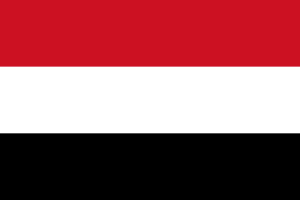
description: three equal horizontal bands of red (top), white, and black
meaning: the band colors come from the Arab Liberation flag and represent oppression (black) overcome through bloody struggle (red), to be replaced by a bright future (white)
note: note: similar to the flags of Iraq (Arabic inscription centered in the white band) and Egypt (heraldic eagle centered in the white band)
meaning: the band colors come from the Arab Liberation flag and represent oppression (black) overcome through bloody struggle (red), to be replaced by a bright future (white)
note: note: similar to the flags of Iraq (Arabic inscription centered in the white band) and Egypt (heraldic eagle centered in the white band)
National symbol(s)
golden eagle
National color(s)
red, white, black
National anthem(s)
title: "Al-qumhuriyatu l-muttahida" (United Republic)
lyrics/music: Abdullah Abdulwahab NOA'MAN/Ayyoab Tarish ABSI
history: adopted 1990; the music first served as the anthem for South Yemen before unification with North Yemen in 1990
Reference: 1990lyrics/music: Abdullah Abdulwahab NOA'MAN/Ayyoab Tarish ABSI
history: adopted 1990; the music first served as the anthem for South Yemen before unification with North Yemen in 1990
National heritage
total World Heritage Sites: 5 (4 cultural, 1 natural)
selected World Heritage Site locales: Old Walled City of Shibam (c); Old City of Sana'a (c); Historic Town of Zabid (c); Socotra Archipelago (n); Landmarks of the Ancient Kingdom of Saba, Marib (c)
selected World Heritage Site locales: Old Walled City of Shibam (c); Old City of Sana'a (c); Historic Town of Zabid (c); Socotra Archipelago (n); Landmarks of the Ancient Kingdom of Saba, Marib (c)
Government & Official Links
| Institution | Official website | X / Twitter | Verification |
|---|---|---|---|
| Yemen official website | Official website | — | Reported · source Checked September 20, 2026 |
Institutional accounts only; personal accounts of political office-holders are excluded.
Legislature & Elections
Legislature
| Name | Chamber | Seats | Electoral system |
|---|---|---|---|
| Parliament of Yemen | — | — | — |
Economy
Economic overview
low-income Middle Eastern economy; infrastructure, trade, and economic institutions devastated by civil war; oil/gas-dependent but decreasing reserves; massive poverty, food insecurity, and unemployment; high inflation
Real GDP (purchasing power parity)
Real GDP (purchasing power parity) 2024: $18.719 billion (2024 est.)
Real GDP (purchasing power parity) 2023: $18.908 billion (2023 est.)
Real GDP (purchasing power parity) 2022: $19.294 billion (2022 est.)
note: note: data in 2015 dollars
Reference: 2024, 2023, 2022, 2015Real GDP (purchasing power parity) 2023: $18.908 billion (2023 est.)
Real GDP (purchasing power parity) 2022: $19.294 billion (2022 est.)
note: note: data in 2015 dollars
Real GDP per capita
Real GDP per capita 2024: $200 (2024 est.)
Real GDP per capita 2023: $200 (2023 est.)
Real GDP per capita 2022: $300 (2022 est.)
note: note: data in 2015 dollars
Reference: 2024, 2023, 2022, 2015Real GDP per capita 2023: $200 (2023 est.)
Real GDP per capita 2022: $300 (2022 est.)
note: note: data in 2015 dollars
GDP (official exchange rate)
$8.278 billion (2024 est.)
note: note: data in current dollars at official exchange rate
Reference: 2024note: note: data in current dollars at official exchange rate
Inflation rate (consumer prices)
Inflation rate (consumer prices) 2022: 29.1% (2022 est.)
Inflation rate (consumer prices) 2021: 26% (2021 est.)
Inflation rate (consumer prices) 2020: 19.6% (2020 est.)
note: note: annual % change based on consumer prices
Reference: 2022, 2021, 2020Inflation rate (consumer prices) 2021: 26% (2021 est.)
Inflation rate (consumer prices) 2020: 19.6% (2020 est.)
note: note: annual % change based on consumer prices
GDP - composition, by sector of origin
agriculture: 28.7% (2018 est.)
industry: 25.4% (2018 est.)
services: 41.8% (2018 est.)
note: note: figures may not total 100% due to non-allocated consumption not captured in sector-reported data
Reference: 2018industry: 25.4% (2018 est.)
services: 41.8% (2018 est.)
note: note: figures may not total 100% due to non-allocated consumption not captured in sector-reported data
Agricultural products
mangoes/guavas, potatoes, milk, onions, spices, chicken, sorghum, watermelons, tomatoes, grapes (2023)
note: note: top ten agricultural products based on tonnage
Reference: 2023note: note: top ten agricultural products based on tonnage
Industries
crude oil production and petroleum refining; small-scale production of cotton textiles, leather goods; food processing; handicrafts; aluminum products; cement; commercial ship repair; natural gas production
Industrial production growth rate
-1.1% (2018 est.)
note: note: annual % change in industrial value added based on constant local currency
Reference: 2018note: note: annual % change in industrial value added based on constant local currency
Labor force
7.848 million (2024 est.)
note: note: number of people ages 15 or older who are employed or seeking work
Reference: 2024note: note: number of people ages 15 or older who are employed or seeking work
Youth unemployment rate (ages 15-24)
total: 32.4% (2024 est.)
male: 31.8% (2024 est.)
female: 38.4% (2024 est.)
note: note: % of labor force ages 15-24 seeking employment
Reference: 2024male: 31.8% (2024 est.)
female: 38.4% (2024 est.)
note: note: % of labor force ages 15-24 seeking employment
Remittances
Remittances 2023: 20.05% of GDP (2023 est.)
Remittances 2022: 16.02% of GDP (2022 est.)
Remittances 2021: 19.44% of GDP (2021 est.)
note: note: personal transfers and compensation between resident and non-resident individuals/households/entities
Reference: 2023, 2022, 2021Remittances 2022: 16.02% of GDP (2022 est.)
Remittances 2021: 19.44% of GDP (2021 est.)
note: note: personal transfers and compensation between resident and non-resident individuals/households/entities
Budget
revenues: $2.207 billion (2019 est.)
expenditures: $3.585 billion (2019 est.)
Reference: 2019expenditures: $3.585 billion (2019 est.)
Public debt
Public debt 2016: 68.1% of GDP (2016 est.)
Reference: 2016Current account balance
Current account balance 2016: -$2.419 billion (2016 est.)
Current account balance 2015: -$3.026 billion (2015 est.)
Current account balance 2014: -$1.488 billion (2014 est.)
note: note: balance of payments - net trade and primary/secondary income in current dollars
Reference: 2016, 2015, 2014Current account balance 2015: -$3.026 billion (2015 est.)
Current account balance 2014: -$1.488 billion (2014 est.)
note: note: balance of payments - net trade and primary/secondary income in current dollars
Exports
Exports 2017: $384.5 million (2017 est.)
Exports 2016: $938.469 million (2016 est.)
Exports 2015: $1.867 billion (2015 est.)
note: note: balance of payments - exports of goods and services in current dollars
Reference: 2017, 2016, 2015Exports 2016: $938.469 million (2016 est.)
Exports 2015: $1.867 billion (2015 est.)
note: note: balance of payments - exports of goods and services in current dollars
Exports - partners
UAE 28%, India 21%, Saudi Arabia 17%, Oman 7%, Malaysia 5% (2023)
note: note: top five export partners based on percentage share of exports
Reference: 2023note: note: top five export partners based on percentage share of exports
Exports - commodities
gold, fish, scrap iron, shellfish, industrial acids/oils/alcohols (2023)
note: note: top five export commodities based on value in dollars
Reference: 2023note: note: top five export commodities based on value in dollars
Imports
Imports 2017: $4.079 billion (2017 est.)
Imports 2016: $8.256 billion (2016 est.)
Imports 2015: $7.697 billion (2015 est.)
note: note: balance of payments - imports of goods and services in current dollars
Reference: 2017, 2016, 2015Imports 2016: $8.256 billion (2016 est.)
Imports 2015: $7.697 billion (2015 est.)
note: note: balance of payments - imports of goods and services in current dollars
Imports - partners
China 23%, UAE 15%, Saudi Arabia 11%, Turkey 8%, India 7% (2023)
note: note: top five import partners based on percentage share of imports
Reference: 2023note: note: top five import partners based on percentage share of imports
Imports - commodities
wheat, raw sugar, rice, iron bars, plastic products (2023)
note: note: top five import commodities based on value in dollars
Reference: 2023note: note: top five import commodities based on value in dollars
Reserves of foreign exchange and gold
Reserves of foreign exchange and gold 2022: $1.251 billion (2022 est.)
Reserves of foreign exchange and gold 2021: $1.688 billion (2021 est.)
Reserves of foreign exchange and gold 2020: $969.613 million (2020 est.)
note: note: holdings of gold (year-end prices)/foreign exchange/special drawing rights in current dollars
Reference: 2022, 2021, 2020Reserves of foreign exchange and gold 2021: $1.688 billion (2021 est.)
Reserves of foreign exchange and gold 2020: $969.613 million (2020 est.)
note: note: holdings of gold (year-end prices)/foreign exchange/special drawing rights in current dollars
Debt - external
Debt - external 2023: $6.492 billion (2023 est.)
note: note: present value of external debt in current US dollars
Reference: 2023note: note: present value of external debt in current US dollars
Exchange rates
Currency: Yemeni rials (YER) per US dollar -
Exchange rates 2023: 1,355.116 (2023 est.)
Exchange rates 2022: 1,115.002 (2022 est.)
Exchange rates 2021: 1,028.108 (2021 est.)
Exchange rates 2020: 743.006 (2020 est.)
Exchange rates 2019: 486.731 (2019 est.)
Reference: 2023, 2022, 2021, 2020Exchange rates 2023: 1,355.116 (2023 est.)
Exchange rates 2022: 1,115.002 (2022 est.)
Exchange rates 2021: 1,028.108 (2021 est.)
Exchange rates 2020: 743.006 (2020 est.)
Exchange rates 2019: 486.731 (2019 est.)
Trade
Current account balance
Current account balance 2016: -$2.419 billion (2016 est.)
Current account balance 2015: -$3.026 billion (2015 est.)
Current account balance 2014: -$1.488 billion (2014 est.)
note: note: balance of payments - net trade and primary/secondary income in current dollars
Reference: 2016, 2015, 2014Current account balance 2015: -$3.026 billion (2015 est.)
Current account balance 2014: -$1.488 billion (2014 est.)
note: note: balance of payments - net trade and primary/secondary income in current dollars
Exports
Exports 2017: $384.5 million (2017 est.)
Exports 2016: $938.469 million (2016 est.)
Exports 2015: $1.867 billion (2015 est.)
note: note: balance of payments - exports of goods and services in current dollars
Reference: 2017, 2016, 2015Exports 2016: $938.469 million (2016 est.)
Exports 2015: $1.867 billion (2015 est.)
note: note: balance of payments - exports of goods and services in current dollars
Exports - partners
UAE 28%, India 21%, Saudi Arabia 17%, Oman 7%, Malaysia 5% (2023)
note: note: top five export partners based on percentage share of exports
Reference: 2023note: note: top five export partners based on percentage share of exports
Exports - commodities
gold, fish, scrap iron, shellfish, industrial acids/oils/alcohols (2023)
note: note: top five export commodities based on value in dollars
Reference: 2023note: note: top five export commodities based on value in dollars
Imports
Imports 2017: $4.079 billion (2017 est.)
Imports 2016: $8.256 billion (2016 est.)
Imports 2015: $7.697 billion (2015 est.)
note: note: balance of payments - imports of goods and services in current dollars
Reference: 2017, 2016, 2015Imports 2016: $8.256 billion (2016 est.)
Imports 2015: $7.697 billion (2015 est.)
note: note: balance of payments - imports of goods and services in current dollars
Imports - partners
China 23%, UAE 15%, Saudi Arabia 11%, Turkey 8%, India 7% (2023)
note: note: top five import partners based on percentage share of imports
Reference: 2023note: note: top five import partners based on percentage share of imports
Imports - commodities
wheat, raw sugar, rice, iron bars, plastic products (2023)
note: note: top five import commodities based on value in dollars
Reference: 2023note: note: top five import commodities based on value in dollars
Energy & Resources
Electricity
installed generating capacity: 1.79 million kW (2023 est.)
consumption: 2.579 billion kWh (2023 est.)
transmission/distribution losses: 486.24 million kWh (2023 est.)
Reference: 2023consumption: 2.579 billion kWh (2023 est.)
transmission/distribution losses: 486.24 million kWh (2023 est.)
Electricity generation sources
fossil fuels: 83% of total installed capacity (2023 est.)
solar: 17% of total installed capacity (2023 est.)
Reference: 2023solar: 17% of total installed capacity (2023 est.)
Coal
consumption: 27,000 metric tons (2023 est.)
imports: 36,000 metric tons (2023 est.)
Reference: 2023imports: 36,000 metric tons (2023 est.)
Petroleum
total petroleum production: 15,000 bbl/day (2023 est.)
refined petroleum consumption: 58,000 bbl/day (2023 est.)
crude oil estimated reserves: 3 billion barrels (2021 est.)
Reference: 2023, 2021refined petroleum consumption: 58,000 bbl/day (2023 est.)
crude oil estimated reserves: 3 billion barrels (2021 est.)
Natural gas
production: 10.286 million cubic meters (2023 est.)
consumption: 10.286 million cubic meters (2023 est.)
proven reserves: 478.555 billion cubic meters (2021 est.)
Reference: 2023, 2021consumption: 10.286 million cubic meters (2023 est.)
proven reserves: 478.555 billion cubic meters (2021 est.)
Energy consumption per capita
Total energy consumption per capita 2023: 2.987 million Btu/person (2023 est.)
Reference: 2023Infrastructure
Telephones - fixed lines
total subscriptions: 728,000 (2022 est.)
subscriptions per 100 inhabitants: 2 (2022 est.)
Reference: 2022subscriptions per 100 inhabitants: 2 (2022 est.)
Telephones - mobile cellular
total subscriptions: 20 million (2023 est.)
subscriptions per 100 inhabitants: 46 (2021 est.)
Reference: 2023, 2021subscriptions per 100 inhabitants: 46 (2021 est.)
Broadband - fixed subscriptions
total: 486,000 (2022 est.)
subscriptions per 100 inhabitants: 1 (2022 est.)
Reference: 2022subscriptions per 100 inhabitants: 1 (2022 est.)
Health
Maternal mortality ratio
118 deaths/100,000 live births (2023 est.)
Reference: 2023Health expenditure
Health expenditure (as % of GDP): 4.3% of GDP (2015)
Health expenditure (as % of national budget): 2.5% of national budget (2022 est.)
Reference: 2022, 2015Health expenditure (as % of national budget): 2.5% of national budget (2022 est.)
Physician density
0.1 physicians/1,000 population (2023)
Reference: 2023Obesity - adult prevalence rate
17.1% (2016)
Reference: 2016Tobacco use
total: 20.2% (2025 est.)
male: 33.1% (2025 est.)
female: 7.3% (2025 est.)
male: 33.1% (2025 est.)
female: 7.3% (2025 est.)
Education
Literacy
female: 54.1% (2023 est.)
Reference: 2023Rights, Freedoms & Society
Press & Media Freedom
V-Dem expert-coded/modelled source measures. Knelstrom does not create a press-freedom ranking or composite score.
LGBTQ+ Rights & Law
Concrete legal-status fields only; Knelstrom does not generate an LGBTQ rights score or country ranking.
Source: Wikipedia — LGBTQ rights by country or territory (CC BY-SA 4.0). Community-edited legal-status summary; retrieved by Knelstrom and not legal advice.
Crime & Justice
Legal system
mixed system of Islamic (sharia) law, Napoleonic law, English common law, and customary law
Judicial branch
highest court(s): Supreme Court (consists of the court president, 2 deputies, and nearly 50 judges; court organized into constitutional, civil, commercial, family, administrative, criminal, military, and appeals scrutiny divisions)
judge selection and term of office: judges appointed by the Supreme Judicial Council, which is chaired by the president of the republic and includes 10 high-ranking judicial officers; judges serve for life with mandatory retirement at age 65
subordinate courts: appeal courts; district or first instance courts; commercial courts
judge selection and term of office: judges appointed by the Supreme Judicial Council, which is chaired by the president of the republic and includes 10 high-ranking judicial officers; judges serve for life with mandatory retirement at age 65
subordinate courts: appeal courts; district or first instance courts; commercial courts
Military & Security
Military and security forces
Yemeni Armed Forces: Yemeni National Army, Air Force and Air Defense, Navy and Coastal Defense Forces, Border Guard, Strategic Reserve Forces (includes Special Forces and Presidential Protection Brigades, which are under the Ministry of Defense but responsible to the president), Popular Committee Forces (aka Popular Resistance Forces; government-backed tribal militia)
Ministry of Interior: Security Forces, Emergency Forces, Counterterrorism Units (2025)
note: note 1: both Saudi Arabia and the United Arab Emirates have raised and continue to back tribal and regionally based irregular forces in Yemen
note 2: Houthi (alt Huthi; aka Ansarallah) forces include land, aerospace (air, missile), naval/coastal defense, presidential protection, special operations, internal security, and militia/tribal auxiliary components; a considerable portion--up to 70 percent by some estimates--of Yemen’s military and security forces defected in whole or in part to former president SALAH and the Houthi opposition in 2011-2015
Reference: 2025, 2015, 2011Ministry of Interior: Security Forces, Emergency Forces, Counterterrorism Units (2025)
note: note 1: both Saudi Arabia and the United Arab Emirates have raised and continue to back tribal and regionally based irregular forces in Yemen
note 2: Houthi (alt Huthi; aka Ansarallah) forces include land, aerospace (air, missile), naval/coastal defense, presidential protection, special operations, internal security, and militia/tribal auxiliary components; a considerable portion--up to 70 percent by some estimates--of Yemen’s military and security forces defected in whole or in part to former president SALAH and the Houthi opposition in 2011-2015
Military and security service personnel strengths
not available
Military equipment inventories and acquisitions
the Yemeni Government forces have an inventory consisting primarily of Russian and Soviet-era weapons and equipment Houthi forces are armed largely with weapons seized from the Yemeni Government stockpiles, smuggled in from Iran, and manufactured copies of Iranian designs and pre-war Yemeni Government weapons, such as Chinese and Russian missiles (2024)
Reference: 2024Military service age and obligation
18 is the legal minimum age for voluntary military service; conscription abolished in 2001; 2-year service obligation (note - limited information since the start of the civil war in 2014) (2022)
note: note: as late as 2022, all parties to the ongoing conflict were implicated in child soldier recruitment and use; during the beginning of the truce in April 2022, the Houthis signed a plan with the UN to end the recruitment and use of child soldiers; Houthi leaders previously pledged to end the use of child soldiers in 2012, as did the Government of Yemen in 2014
Reference: 2022, 2014, 2012, 2001note: note: as late as 2022, all parties to the ongoing conflict were implicated in child soldier recruitment and use; during the beginning of the truce in April 2022, the Houthis signed a plan with the UN to end the recruitment and use of child soldiers; Houthi leaders previously pledged to end the use of child soldiers in 2012, as did the Government of Yemen in 2014
Military - note
government forces under the Yemeni Ministry of Defense are responsible for both external and internal defense; their priorities are the Houthi separatists (aka Ansarallah), the terrorist groups al-Qa’ida in the Arabian Peninsula (AQAP) and the Islamic State of Iraq and ash-Sham in Yemen (ISIS-Yemen), and maritime security, particularly against arms smuggling; in 2022, the Yemeni Government and the Houthis signed a truce, halting most fighting and establishing humanitarian measures; the former front lines of conflict, in some areas mirroring Yemen’s pre-unification borders, remain static; AQAP and ISIS-Yemen continue to be active in remote areas (2025)
Reference: 2025, 2022International Relations
International law organization participation
has not submitted an ICJ jurisdiction declaration; non-party state to the ICCt
Diplomatic representation in the US
chief of mission: Ambassador Abdulwahab Abdullah Ahmed AL-HAJRI (since 24 July 2025)
chancery: 2319 Wyoming Avenue NW, Washington, DC 20008
telephone: [1] (202) 965-4760
FAX: [1] (202) 337-2017
email address and website: Information@yemenembassy.org
https://www.yemenembassy.org/
Reference: 2025, 2017chancery: 2319 Wyoming Avenue NW, Washington, DC 20008
telephone: [1] (202) 965-4760
FAX: [1] (202) 337-2017
email address and website: Information@yemenembassy.org
https://www.yemenembassy.org/
Diplomatic representation from the US
chief of mission: Ambassador Steven H. FAGIN (since 1 June 2022); note - the embassy closed in March 2015; Yemen Affairs Unit currently operates out of US Embassy Riyadh
mailing address: 6330 Sanaa Place, Washington DC 20521-6330
telephone: US Embassy Riyadh [966] 11-835-4000
FAX: US Embassy Riyadh [966] 11-488-7360
email address and website: YemenEmergencyUSC@state.gov
https://ye.usembassy.gov/
Reference: 2022, 2015mailing address: 6330 Sanaa Place, Washington DC 20521-6330
telephone: US Embassy Riyadh [966] 11-835-4000
FAX: US Embassy Riyadh [966] 11-488-7360
email address and website: YemenEmergencyUSC@state.gov
https://ye.usembassy.gov/
International organization participation
AFESD, AMF, CAEU, CD, EITI (temporarily suspended), FAO, G-77, IAEA, IBRD, ICAO, ICRM, IDA, IDB, IFAD, IFC, IFRCS, ILO, IMF, IMO, IMSO, Interpol, IOC, IOM, IPU, ISO, ITSO, ITU, ITUC (NGOs), LAS, MIGA, MINURSO, MINUSMA, MONUSCO, NAM, OAS (observer), OIC, OPCW, UN, UNAMID, UNCTAD, UNESCO, UNHCR, UNIDO, UNISFA, UNMHA, UNMIL, UNMIS, UNOCI, UNVIM, UNWTO, UPU, WCO, WFTU (NGOs), WHO, WIPO, WMO, WTO
Treaties & Organisations
| Organisation | Status | Joined |
|---|---|---|
| Arab League (Arab League) | member | 1945-05-05 |
| United Nations (UN) | member | 1990-05-22 |
International law organization participation
has not submitted an ICJ jurisdiction declaration; non-party state to the ICCt
International organization participation
AFESD, AMF, CAEU, CD, EITI (temporarily suspended), FAO, G-77, IAEA, IBRD, ICAO, ICRM, IDA, IDB, IFAD, IFC, IFRCS, ILO, IMF, IMO, IMSO, Interpol, IOC, IOM, IPU, ISO, ITSO, ITU, ITUC (NGOs), LAS, MIGA, MINURSO, MINUSMA, MONUSCO, NAM, OAS (observer), OIC, OPCW, UN, UNAMID, UNCTAD, UNESCO, UNHCR, UNIDO, UNISFA, UNMHA, UNMIL, UNMIS, UNOCI, UNVIM, UNWTO, UPU, WCO, WFTU (NGOs), WHO, WIPO, WMO, WTO
Conflict & Security
Refugees and internally displaced persons
refugees: 60,921 (2024 est.)
IDPs: 4,795,983 (2024 est.)
Reference: 2024IDPs: 4,795,983 (2024 est.)
Terrorist group(s)
Ansarallah (Houthis); Hizballah; Islamic Revolutionary Guard Corps (IRGC)/Qods Force; Islamic State of Iraq and ash-Sham (ISIS) - Yemen; al-Qa'ida in the Arabian Peninsula (AQAP)
note: note: details about the history, aims, leadership, organization, areas of operation, tactics, targets, weapons, size, and sources of support of the group(s) appear(s) in the Terrorism reference guide
note: note: details about the history, aims, leadership, organization, areas of operation, tactics, targets, weapons, size, and sources of support of the group(s) appear(s) in the Terrorism reference guide
Transportation & Logistics
Civil aircraft registration country code prefix
7O
Airports
37 (2025)
Heliports
6 (2025)
Merchant marine
total: 30 (2023)
by type: general cargo 2, oil tanker 1, other 27
Reference: 2023by type: general cargo 2, oil tanker 1, other 27
Ports
total ports: 10 (2024)
large: 1
medium: 2
small: 2
very small: 5
ports with oil terminals: 6
key ports: Aden, Al Ahmadi, Al Mukalla, Al Mukha, Ras Isa Marine Terminal
Reference: 2024large: 1
medium: 2
small: 2
very small: 5
ports with oil terminals: 6
key ports: Aden, Al Ahmadi, Al Mukalla, Al Mukha, Ras Isa Marine Terminal
Environment
Environmental issues
limited natural freshwater resources; inadequate supplies of potable water; overgrazing; soil erosion; desertification
International environmental agreements
party to: Biodiversity, Climate Change, Climate Change-Kyoto Protocol, Desertification, Endangered Species, Environmental Modification, Hazardous Wastes, Law of the Sea, Marine Dumping-London Protocol, Nuclear Test Ban, Ozone Layer Protection, Wetlands
signed, but not ratified: Climate Change-Paris Agreement, Comprehensive Nuclear Test Ban
signed, but not ratified: Climate Change-Paris Agreement, Comprehensive Nuclear Test Ban
Climate
mostly desert; hot and humid along west coast; temperate in western mountains affected by seasonal monsoon; extraordinarily hot, dry, harsh desert in east
Land use
agricultural land: 44.4% (2023 est.)
agricultural land: arable land: arable land: 2.2% (2023 est.)
agricultural land: permanent crops: permanent crops: 0.6% (2023 est.)
agricultural land: permanent pasture: permanent pasture: 41.7% (2023 est.)
forest: 1% (2023 est.)
other: 54.5% (2023 est.)
Reference: 2023agricultural land: arable land: arable land: 2.2% (2023 est.)
agricultural land: permanent crops: permanent crops: 0.6% (2023 est.)
agricultural land: permanent pasture: permanent pasture: 41.7% (2023 est.)
forest: 1% (2023 est.)
other: 54.5% (2023 est.)
Urbanization
urban population: 39.8% of total population (2023)
rate of urbanization: 3.71% annual rate of change (2015-20 est.)
Reference: 2023, 2015rate of urbanization: 3.71% annual rate of change (2015-20 est.)
Carbon dioxide emissions
total emissions: 8.193 million metric tonnes of CO2 (2023 est.)
from coal and metallurgical coke: 93,000 metric tonnes of CO2 (2023 est.)
from petroleum and other liquids: 8.08 million metric tonnes of CO2 (2023 est.)
from consumed natural gas: 21,000 metric tonnes of CO2 (2023 est.)
Reference: 2023from coal and metallurgical coke: 93,000 metric tonnes of CO2 (2023 est.)
from petroleum and other liquids: 8.08 million metric tonnes of CO2 (2023 est.)
from consumed natural gas: 21,000 metric tonnes of CO2 (2023 est.)
Particulate matter emissions
43.9 micrograms per cubic meter (2019 est.)
Reference: 2019Methane emissions
energy: 190.5 kt (2022-2024 est.)
agriculture: 192.2 kt (2019-2021 est.)
waste: 135.9 kt (2019-2021 est.)
other: 0.4 kt (2019-2021 est.)
Reference: 2024, 2022, 2021, 2019agriculture: 192.2 kt (2019-2021 est.)
waste: 135.9 kt (2019-2021 est.)
other: 0.4 kt (2019-2021 est.)
Waste and recycling
municipal solid waste generated annually: 4.837 million tons (2024 est.)
percent of municipal solid waste recycled: 8% (2016 est.)
Reference: 2024, 2016percent of municipal solid waste recycled: 8% (2016 est.)
Total water withdrawal
municipal: 265 million cubic meters (2022 est.)
industrial: 65 million cubic meters (2022 est.)
agricultural: 3.235 billion cubic meters (2022 est.)
Reference: 2022industrial: 65 million cubic meters (2022 est.)
agricultural: 3.235 billion cubic meters (2022 est.)
Total renewable water resources
2.1 billion cubic meters (2022 est.)
Reference: 2022Communications & Media
Telephones - fixed lines
total subscriptions: 728,000 (2022 est.)
subscriptions per 100 inhabitants: 2 (2022 est.)
Reference: 2022subscriptions per 100 inhabitants: 2 (2022 est.)
Telephones - mobile cellular
total subscriptions: 20 million (2023 est.)
subscriptions per 100 inhabitants: 46 (2021 est.)
Reference: 2023, 2021subscriptions per 100 inhabitants: 46 (2021 est.)
Broadcast media
state-run TV with 2 stations; state-run radio with 2 national radio stations and 5 local stations; stations from Oman and Saudi Arabia can be accessed
Internet country code
.ye
Internet users
percent of population: 14% (2020 est.)
Reference: 2020Broadband - fixed subscriptions
total: 486,000 (2022 est.)
subscriptions per 100 inhabitants: 1 (2022 est.)
Reference: 2022subscriptions per 100 inhabitants: 1 (2022 est.)
Historical Trends
Population
Source: World Bank WDI. Historical observations shown by reference period.
View Population data table
| Period | Value | Source |
|---|---|---|
| 2016 | 32,109,010 | world_bank_wdi |
| 2017 | 33,090,921 | world_bank_wdi |
| 2018 | 34,085,182 | world_bank_wdi |
| 2019 | 35,111,408 | world_bank_wdi |
| 2020 | 36,134,863 | world_bank_wdi |
| 2021 | 37,140,230 | world_bank_wdi |
| 2022 | 38,222,876 | world_bank_wdi |
| 2023 | 39,390,799 | world_bank_wdi |
| 2024 | 40,583,164 | world_bank_wdi |
| 2025 | 41,773,878 | world_bank_wdi |
GDP (current US$)
Source: World Bank WDI. Historical observations shown by reference period.
View GDP (current US$) data table
| Period | Value | Source |
|---|---|---|
| 2016 | $31,317,825,274 | world_bank_wdi |
| 2017 | $26,842,229,045 | world_bank_wdi |
| 2018 | $21,606,160,663 | world_bank_wdi |
International migrant stock (immigrants)
Source: World Bank WDI. Historical observations shown by reference period.
View International migrant stock (immigrants) data table
| Period | Value | Source |
|---|---|---|
| 2020 | 387,113 | world_bank_wdi |
| 2024 | 392,997 | world_bank_wdi |
International emigrant stock
Source: World Bank WDI. Historical observations shown by reference period.
View International emigrant stock data table
| Period | Value | Source |
|---|---|---|
| 1990 | 388,323 | un_migrant_stock_2024 |
| 1995 | 490,575 | un_migrant_stock_2024 |
| 2000 | 533,500 | un_migrant_stock_2024 |
| 2005 | 668,381 | un_migrant_stock_2024 |
| 2010 | 1,199,914 | un_migrant_stock_2024 |
| 2015 | 2,169,838 | un_migrant_stock_2024 |
| 2020 | 2,240,104 | un_migrant_stock_2024 |
| 2024 | 2,480,734 | un_migrant_stock_2024 |
Net migration
Source: World Bank WDI. Historical observations shown by reference period.
View Net migration data table
| Period | Value | Source |
|---|---|---|
| 2016 | -6,492 | world_bank_wdi |
| 2017 | -12,086 | world_bank_wdi |
| 2018 | -26,335 | world_bank_wdi |
| 2019 | 2,129 | world_bank_wdi |
| 2020 | -97,982 | world_bank_wdi |
| 2021 | -81,248 | world_bank_wdi |
| 2022 | -10,448 | world_bank_wdi |
| 2023 | -5,233 | world_bank_wdi |
| 2024 | -10,482 | world_bank_wdi |
| 2025 | -16,291 | world_bank_wdi |
Sources & Methodology
Current statistical observations include their reference period and provenance. Reference fields from approved source datasets are attributed below. Missing information is left unknown rather than inferred.
| Indicator | Value | Period | Source | Status |
|---|---|---|---|---|
| Population | 41,773,878 | 2025 | World Bank — World Development Indicators | Verified |
| UN Population Division population estimate | 42,961,653 | 2026 | UN Population Division Data Portal | Estimated |
| Wikidata population (fallback) | 28,250,420 | 2017 | Wikidata | Reported |
| International migrant stock (immigrants) | 392,997 | 2024 | World Bank — World Development Indicators | Verified |
| International migrant stock | 1.0% | 2024 | World Bank — World Development Indicators | Verified |
| International emigrant stock | 2,480,734 | 2024 | UN DESA International Migrant Stock 2024 | Estimated |
| Net migration | -16,291 | 2025 | World Bank — World Development Indicators | Verified |
| Refugees hosted | 49,107 | 2025 | UNHCR Refugee Population Statistics | Verified |
| Asylum seekers hosted | 14,642 | 2025 | UNHCR Refugee Population Statistics | Verified |
| Refugees from this country | 57,327 | 2025 | World Bank — World Development Indicators | Verified |
| Asylum seekers from this country | 25,860 | 2025 | World Bank — World Development Indicators | Verified |
| Freedom of expression & alternative information index | 0.219 | 2025 | Varieties of Democracy (V-Dem) Country-Year Dataset v16 | Estimated |
| Government censorship effort — media | -0.982 | 2025 | Varieties of Democracy (V-Dem) Country-Year Dataset v16 | Estimated |
| Harassment of journalists | -1.069 | 2025 | Varieties of Democracy (V-Dem) Country-Year Dataset v16 | Estimated |
| Print/broadcast media critical of government | -1.469 | 2025 | Varieties of Democracy (V-Dem) Country-Year Dataset v16 | Estimated |
| Range of perspectives in major media | -0.850 | 2025 | Varieties of Democracy (V-Dem) Country-Year Dataset v16 | Estimated |
| Media bias | -0.723 | 2025 | Varieties of Democracy (V-Dem) Country-Year Dataset v16 | Estimated |
| Media self-censorship | -0.889 | 2025 | Varieties of Democracy (V-Dem) Country-Year Dataset v16 | Estimated |
| Same-sex sexual activity | No No No Illegal (codified in 1994); Penalty: Unmarried men punished with 100 lashes of the whip or a maximum of one year of imprisonment, stoning for adultery is not enforced. Women punished up to three years of imprisonment. | current | Wikipedia — LGBTQ rights by country or territory | Reported |
| Recognition of same-sex relationships | No No | current | Wikipedia — LGBTQ rights by country or territory | Reported |
| Same-sex marriage | No No | current | Wikipedia — LGBTQ rights by country or territory | Reported |
| Same-sex adoption | No No | current | Wikipedia — LGBTQ rights by country or territory | Reported |
| Open military service | No No | current | Wikipedia — LGBTQ rights by country or territory | Reported |
| Sexual-orientation anti-discrimination law | No No | current | Wikipedia — LGBTQ rights by country or territory | Reported |
| Gender identity / expression law | No No | current | Wikipedia — LGBTQ rights by country or territory | Reported |
| GDP (current US$) | $21,606,160,663 | 2018 | World Bank — World Development Indicators | Verified |
| GDP per capita (current US$) | $634 | 2018 | World Bank — World Development Indicators | Verified |
| GDP growth | 0.8% | 2018 | World Bank — World Development Indicators | Verified |
| Inflation, consumer prices | 8.1% | 2014 | World Bank — World Development Indicators | Verified |
| Unemployment | 17.3% | 2025 | World Bank — World Development Indicators | Verified |
| Income level | Low income | current | World Bank — World Development Indicators | Verified |
| Life expectancy at birth | 69.4 years | 2024 | World Bank — World Development Indicators | Verified |
| Fertility rate | 4.5 | 2024 | World Bank — World Development Indicators | Verified |
| Urban population | 37.0% | 2025 | World Bank — World Development Indicators | Verified |
| Individuals using the Internet | 17.5% | 2019 | World Bank — World Development Indicators | Verified |
| Exports of goods and services | 8.8% | 2018 | World Bank — World Development Indicators | Verified |
| Imports of goods and services | 47.3% | 2018 | World Bank — World Development Indicators | Verified |
| Trade | 56.1% | 2018 | World Bank — World Development Indicators | Verified |
| Adult literacy rate | 37.1% | 1994 | World Bank — World Development Indicators | Verified |
| Secondary school enrolment, gross | 43.7% | 2016 | World Bank — World Development Indicators | Verified |
| Government education expenditure | 5.2% | 2008 | World Bank — World Development Indicators | Verified |
| Access to electricity | 86.3% | 2024 | World Bank — World Development Indicators | Verified |
| Electric power consumption | 90 kWh/person | 2023 | World Bank — World Development Indicators | Verified |
| Renewable energy consumption | 3.7% | 2021 | World Bank — World Development Indicators | Verified |
| Current health expenditure | 9.7% | 2023 | World Bank — World Development Indicators | Verified |
| Infant mortality rate | 33.8 per 1,000 | 2024 | World Bank — World Development Indicators | Verified |
| Forest area | 1.0% | 2023 | World Bank — World Development Indicators | Verified |
| Mobile cellular subscriptions | 50.9 per 100 | 2023 | World Bank — World Development Indicators | Verified |
| Fixed broadband subscriptions | 1.3 per 100 | 2022 | World Bank — World Development Indicators | Verified |
| Secure Internet servers | 15 per million | 2024 | World Bank — World Development Indicators | Verified |
| Latitude | 15.3520° | current | World Bank — World Development Indicators | Verified |
| Longitude | 44.2075° | current | World Bank — World Development Indicators | Verified |
| Latitude (Wikidata) | 15.5000° | current | Wikidata | Reported |
| Longitude (Wikidata) | 48.0000° | current | Wikidata | Reported |
| Time zone | UTC+03:00, Asia/Aden | current | Wikidata | Reported |
| Form of government | republic, presidential system | current | Wikidata | Reported |
Data attribution
Credits below are generated from sources actually used by this country profile. Source-specific terms take precedence.
- CIA World Factbook, final 2025 country profile (structured via factbook.json). Accessed September 20, 2026. U.S. Government public-domain data; retained as a reference source where a newer approved field is not available. Source · Terms/licence
- United Nations, Department of Economic and Social Affairs, Population Division, International Migrant Stock 2024; data access/processing via Our World in Data. Accessed September 20, 2026. Underlying UN dataset used under CC BY 3.0 IGO. Source · Terms/licence
- United Nations, Department of Economic and Social Affairs, Population Division, World Population Prospects (WPP indicator 49) Accessed September 19, 2026. Used under CC BY 3.0 IGO; current-year WPP population values are presented as estimates/projections where applicable. Source · Terms/licence
- UNHCR Refugee Population Statistics Database. Accessed October 12, 2026. Used under CC BY 4.0 except where a dataset identifies a different source or licence. Source · Terms/licence
- Varieties of Democracy (V-Dem), Country-Year Dataset v16 (variables: v2mebias, v2mecenefm, v2mecrit, v2meharjrn, v2merange, v2meslfcen, v2x_freexp_altinf) Accessed September 20, 2026. Used under CC BY-SA 4.0; V-Dem measures are expert-coded/modelled and no V-Dem endorsement is implied. Source · Terms/licence
- Wikidata structured data (CC0). Accessed September 20, 2026. Attribution is provided by Knelstrom for provenance although CC0 does not require it. Source · Terms/licence
- Wikipedia, “LGBTQ rights by country or territory” (source revision/data fields: Wikipedia revision 1374406645 — Gender identity / expression law, Wikipedia revision 1374406645 — Open military service, Wikipedia revision 1374406645 — Recognition of same-sex relationships, Wikipedia revision 1374406645 — Same-sex adoption, Wikipedia revision 1374406645 — Same-sex marriage, Wikipedia revision 1374406645 — Same-sex sexual activity, Wikipedia revision 1374406645 — Sexual-orientation anti-discrimination law) Accessed October 18, 2026. Used under CC BY-SA 4.0. Knelstrom changes formatting and presents the imported material as a community-edited legal-status summary, not legal advice or a Knelstrom rights score. Source · Terms/licence
- World Bank, World Development Indicators (series: AG.LND.FRST.ZS, country_metadata, EG.ELC.ACCS.ZS, EG.FEC.RNEW.ZS, EG.USE.ELEC.KH.PC, FP.CPI.TOTL.ZG, IT.CEL.SETS.P2, IT.NET.BBND.P2, IT.NET.SECR.P6, IT.NET.USER.ZS, NE.EXP.GNFS.ZS, NE.IMP.GNFS.ZS, NE.TRD.GNFS.ZS, NY.GDP.MKTP.CD, NY.GDP.MKTP.KD.ZG, NY.GDP.PCAP.CD, SE.ADT.LITR.ZS, SE.SEC.ENRR, SE.XPD.TOTL.GD.ZS, SH.XPD.CHEX.GD.ZS, SL.UEM.TOTL.ZS, SM.POP.ASYS.EO, SM.POP.NETM, SM.POP.RHCR.EO, SM.POP.TOTL, SM.POP.TOTL.ZS, SP.DYN.IMRT.IN, SP.DYN.LE00.IN, SP.DYN.TFRT.IN, SP.POP.TOTL, SP.URB.TOTL.IN.ZS) Accessed October 19, 2026. Data used under CC BY 4.0; Knelstrom presentation/formatting may differ from the source. Source · Terms/licence
- Country flag from Wikimedia Commons. https://commons.wikimedia.org/wiki/File%3AFlag_of_Yemen.svg
Knelstrom does not imply endorsement by any listed data provider.
Last automated statistical refresh: 2026-10-19 20:52:33