
Knelstrom Intelligence · World Factbook
India
Republic of India
CapitalNew Delhi
Population1,463,865,525
GDP$3.96tn
Area3,287,263 km²
RegionSouth Asia
Latest source check will run in the background.
Country facts
Overview
Background
The Indus Valley civilization, one of the world's oldest, flourished during the 3rd and 2nd millennia B.C. and extended into northwestern India. Aryan tribes from the northwest infiltrated the Indian subcontinent about 1500 B.C.; their merger with the earlier Dravidian inhabitants created the classical Indian culture. The Maurya Empire of the 4th and 3rd centuries B.C. -- which reached its zenith under ASHOKA -- united much of South Asia. The Gupta dynasty (4th to 6th centuries A.D.) ushered in The Golden Age, which saw a flowering of Indian science, art, and culture. Islam spread across the subcontinent over a period of 700 years. In the 10th and 11th centuries, Turks and Afghans invaded India and established the Delhi Sultanate. In the early 16th century, the Emperor BABUR established the Mughal Dynasty, which ruled large sections of India for more than three centuries. European explorers began establishing footholds in India during the 16th century.
By the 19th century, Great Britain had become the dominant political power on the subcontinent, and India was seen as the "Jewel in the Crown" of the British Empire. The British Indian Army played a vital role in both World Wars. Years of nonviolent resistance to British rule, led by Mohandas GANDHI and Jawaharlal NEHRU, eventually resulted in Indian independence in 1947. Large-scale communal violence took place before and after the subcontinent partition into two separate states -- India and Pakistan. The neighboring countries have fought three wars since independence, the last of which was in 1971 and resulted in East Pakistan becoming the separate nation of Bangladesh. India's nuclear weapons tests in 1998 emboldened Pakistan to conduct its own tests that same year. In 2008, terrorists originating from Pakistan conducted a series of coordinated attacks in Mumbai, India's financial capital. India's economic growth after economic reforms in 1991, a massive youth population, and a strategic geographic location have contributed to the country's emergence as a regional and global power. However, India still faces pressing problems such as extensive poverty, widespread corruption, and environmental degradation, and its restrictive business climate challenges economic growth expectations.
Reference: 2008, 1998, 1991, 1971By the 19th century, Great Britain had become the dominant political power on the subcontinent, and India was seen as the "Jewel in the Crown" of the British Empire. The British Indian Army played a vital role in both World Wars. Years of nonviolent resistance to British rule, led by Mohandas GANDHI and Jawaharlal NEHRU, eventually resulted in Indian independence in 1947. Large-scale communal violence took place before and after the subcontinent partition into two separate states -- India and Pakistan. The neighboring countries have fought three wars since independence, the last of which was in 1971 and resulted in East Pakistan becoming the separate nation of Bangladesh. India's nuclear weapons tests in 1998 emboldened Pakistan to conduct its own tests that same year. In 2008, terrorists originating from Pakistan conducted a series of coordinated attacks in Mumbai, India's financial capital. India's economic growth after economic reforms in 1991, a massive youth population, and a strategic geographic location have contributed to the country's emergence as a regional and global power. However, India still faces pressing problems such as extensive poverty, widespread corruption, and environmental degradation, and its restrictive business climate challenges economic growth expectations.
Geography
Location
Southern Asia, bordering the Arabian Sea and the Bay of Bengal, between Burma and Pakistan
Geographic coordinates
20 00 N, 77 00 E
Map references
Asia
Area
total: 3,287,263 sq km
land: 2,973,193 sq km
water: 314,070 sq km
land: 2,973,193 sq km
water: 314,070 sq km
Area - comparative
slightly more than one-third the size of the US
Land boundaries
total: 13,888 km
border countries: Bangladesh 4,142 km; Bhutan 659 km; Burma 1,468 km; China 2,659 km; Nepal 1,770 km; Pakistan 3,190 km
border countries: Bangladesh 4,142 km; Bhutan 659 km; Burma 1,468 km; China 2,659 km; Nepal 1,770 km; Pakistan 3,190 km
Coastline
7,000 km
Maritime claims
territorial sea: 12 nm
contiguous zone: 24 nm
exclusive economic zone: 200 nm
continental shelf: 200 nm or to the edge of the continental margin
contiguous zone: 24 nm
exclusive economic zone: 200 nm
continental shelf: 200 nm or to the edge of the continental margin
Climate
varies from tropical monsoon in south to temperate in north
Terrain
upland plain (Deccan Plateau) in south, flat to rolling plain along the Ganges, deserts in west, Himalayas in north
Elevation
highest point: Kanchenjunga 8,586 m
lowest point: Indian Ocean 0 m
mean elevation: 160 m
lowest point: Indian Ocean 0 m
mean elevation: 160 m
Natural resources
coal (fourth-largest reserves in the world), antimony, iron ore, lead, manganese, mica, bauxite, rare earth elements, titanium ore, chromite, natural gas, diamonds, petroleum, limestone, arable land
Land use
agricultural land: 60.1% (2023 est.)
agricultural land: arable land: arable land: 51.8% (2023 est.)
agricultural land: permanent crops: permanent crops: 4.9% (2023 est.)
agricultural land: permanent pasture: permanent pasture: 3.4% (2023 est.)
forest: 24.4% (2023 est.)
other: 15.5% (2023 est.)
Reference: 2023agricultural land: arable land: arable land: 51.8% (2023 est.)
agricultural land: permanent crops: permanent crops: 4.9% (2023 est.)
agricultural land: permanent pasture: permanent pasture: 3.4% (2023 est.)
forest: 24.4% (2023 est.)
other: 15.5% (2023 est.)
Irrigated land
754,562 sq km (2022)
Reference: 2022Major lakes (area sq km)
salt water lake(s): Chilika Lake - 1,170 sq km
Major rivers (by length in km)
Brahmaputra (shared with China [s] and Bangladesh [m]) - 3,969 km; Indus (shared with China [s] and Pakistan [m]) - 3,610 km; Ganges river source (shared with Bangladesh [m]) - 2,704 km; Godavari - 1,465 km; Sutlej (shared with China [s] and Pakistan [m]) - 1,372 km; Yamuna - 1,370 km; Narmada - 1,289 km; Chenab river source (shared with Pakistan [m]) - 1,086 km ; Ghaghara river mouth (shared with China [s] and Nepal) - 1,080 km
note: [s] after country name indicates river source; [m] after country name indicates river mouth
note: [s] after country name indicates river source; [m] after country name indicates river mouth
Major watersheds (area sq km)
Indian Ocean drainage: Brahmaputra (651,335 sq km), Ganges (1,016,124 sq km), Indus (1,081,718 sq km), Irrawaddy (413,710 sq km)
Major aquifers
Indus-Ganges-Brahmaputra Basin
Population distribution
a very high population density exists throughout most of the country, with the notable exception of the deserts in the northwest and the mountain fringe in the north; the core of the population is in the north along the banks of the Ganges, with other river valleys and southern coastal areas also having large population concentrations
Natural hazards
droughts; flash floods, as well as widespread and destructive flooding from monsoonal rains; severe thunderstorms; earthquakes
volcanism: Barren Island (354 m) in the Andaman Sea has been active in recent years
volcanism: Barren Island (354 m) in the Andaman Sea has been active in recent years
Geography - note
dominates South Asian subcontinent; near important Indian Ocean trade routes; Kanchenjunga, third tallest mountain in the world, lies on the border with Nepal
Population & Society
Nationality
noun: Indian(s)
adjective: Indian
adjective: Indian
Ethnic groups
Indo-Aryan 72%, Dravidian 25%, and other 3% (2000)
Reference: 2000Languages
Languages: Hindi 43.6%, Bengali 8%, Marathi 6.9%, Telugu 6.7%, Tamil 5.7%, Gujarati 4.6%, Urdu 4.2%, Kannada 3.6%, Odia 3.1%, Malayalam 2.9%, Punjabi 2.7%, Assamese 1.3%, Maithili 1.1%, other 5.6%; English is the subsidiary official language but is the most important one for national, political, and commercial communication (2011 est.)
major-language sample(s): विश्व फ़ैक्टबुक, आधारभूत जानकारी का एक अनिवार्य स्रोत (Hindi)
The World Factbook, the indispensable source for basic information.
note: note 1: there are 22 other recognized languages -- Assamese, Bengali, Bodo, Dogri, Gujarati, Hindi, Kannada, Kashmiri, Konkani, Maithili, Malayalam, Manipuri, Marathi, Nepali, Odia, Punjabi, Sanskrit, Santali, Sindhi, Tamil, Telugu, Urdu
note 2: Hindustani is a popular variant of Hindi/Urdu spoken widely throughout northern India but is not an official language
Reference: 2011major-language sample(s): विश्व फ़ैक्टबुक, आधारभूत जानकारी का एक अनिवार्य स्रोत (Hindi)
The World Factbook, the indispensable source for basic information.
note: note 1: there are 22 other recognized languages -- Assamese, Bengali, Bodo, Dogri, Gujarati, Hindi, Kannada, Kashmiri, Konkani, Maithili, Malayalam, Manipuri, Marathi, Nepali, Odia, Punjabi, Sanskrit, Santali, Sindhi, Tamil, Telugu, Urdu
note 2: Hindustani is a popular variant of Hindi/Urdu spoken widely throughout northern India but is not an official language
Religions
Hindu 79.8%, Muslim 14.2%, Christian 2.3%, Sikh 1.7%, other and unspecified 2% (2011 est.)
Reference: 2011Age structure
0-14 years: 24.5% (male 181,115,052/female 163,647,028)
15-64 years: 68.7% (male 500,568,593/female 467,593,781)
65 years and over: 6.8% (2024 est.) (male 44,101,180/female 52,102,662)
Reference: 202415-64 years: 68.7% (male 500,568,593/female 467,593,781)
65 years and over: 6.8% (2024 est.) (male 44,101,180/female 52,102,662)
Dependency ratios
total dependency ratio: 45.5 (2024 est.)
youth dependency ratio: 35.6 (2024 est.)
elderly dependency ratio: 9.9 (2024 est.)
potential support ratio: 10.1 (2024 est.)
Reference: 2024youth dependency ratio: 35.6 (2024 est.)
elderly dependency ratio: 9.9 (2024 est.)
potential support ratio: 10.1 (2024 est.)
Median age
total: 29.8 years (2024 est.)
male: 29.1 years
female: 30.5 years
Reference: 2024male: 29.1 years
female: 30.5 years
Population growth rate
0.72% (2024 est.)
Reference: 2024Birth rate
16.2 births/1,000 population (2024 est.)
Reference: 2024Death rate
9.1 deaths/1,000 population (2024 est.)
Reference: 2024Net migration rate
0.1 migrant(s)/1,000 population (2024 est.)
Reference: 2024Population distribution
a very high population density exists throughout most of the country, with the notable exception of the deserts in the northwest and the mountain fringe in the north; the core of the population is in the north along the banks of the Ganges, with other river valleys and southern coastal areas also having large population concentrations
Major urban areas - population
32.941 million NEW DELHI (capital), 21.297 million Mumbai, 15.333 million Kolkata, 13.608 million Bangalore, 11.776 million Chennai, 10.801 million Hyderabad (2023)
Reference: 2023Sex ratio
at birth: 1.1 male(s)/female
0-14 years: 1.11 male(s)/female
15-64 years: 1.07 male(s)/female
65 years and over: 0.85 male(s)/female
total population: 1.06 male(s)/female (2024 est.)
Reference: 20240-14 years: 1.11 male(s)/female
15-64 years: 1.07 male(s)/female
65 years and over: 0.85 male(s)/female
total population: 1.06 male(s)/female (2024 est.)
Mother's mean age at first birth
21.2 years (2019/21)
note: note: data represents median age at first birth among women 25-49
Reference: 2019note: note: data represents median age at first birth among women 25-49
Maternal mortality ratio
80 deaths/100,000 live births (2023 est.)
Reference: 2023Gross reproduction rate
0.97 (2024 est.)
Reference: 2024Drinking water source
improved: urban: urban: 95.8% of population (2022 est.)
improved: rural: rural: 91.9% of population (2022 est.)
improved: total: total: 93.3% of population (2022 est.)
unimproved: urban: urban: 4.2% of population (2022 est.)
unimproved: rural: rural: 8.1% of population (2022 est.)
unimproved: total: total: 6.7% of population (2022 est.)
Reference: 2022improved: rural: rural: 91.9% of population (2022 est.)
improved: total: total: 93.3% of population (2022 est.)
unimproved: urban: urban: 4.2% of population (2022 est.)
unimproved: rural: rural: 8.1% of population (2022 est.)
unimproved: total: total: 6.7% of population (2022 est.)
Health expenditure
Health expenditure (as % of GDP): 3.3% of GDP (2021)
Health expenditure (as % of national budget): 4.5% of national budget (2022 est.)
Reference: 2022, 2021Health expenditure (as % of national budget): 4.5% of national budget (2022 est.)
Physician density
0.72 physicians/1,000 population (2020)
Reference: 2020Hospital bed density
1.6 beds/1,000 population (2021 est.)
Reference: 2021Sanitation facility access
improved: urban: urban: 99.4% of population (2022 est.)
improved: rural: rural: 83% of population (2022 est.)
improved: total: total: 88.9% of population (2022 est.)
unimproved: urban: urban: 0.6% of population (2022 est.)
unimproved: rural: rural: 17% of population (2022 est.)
unimproved: total: total: 11.1% of population (2022 est.)
Reference: 2022improved: rural: rural: 83% of population (2022 est.)
improved: total: total: 88.9% of population (2022 est.)
unimproved: urban: urban: 0.6% of population (2022 est.)
unimproved: rural: rural: 17% of population (2022 est.)
unimproved: total: total: 11.1% of population (2022 est.)
Obesity - adult prevalence rate
3.9% (2016)
Reference: 2016Alcohol consumption per capita
total: 3.09 liters of pure alcohol (2019 est.)
beer: 0.23 liters of pure alcohol (2019 est.)
wine: 0 liters of pure alcohol (2019 est.)
spirits: 2.85 liters of pure alcohol (2019 est.)
other alcohols: 0 liters of pure alcohol (2019 est.)
Reference: 2019beer: 0.23 liters of pure alcohol (2019 est.)
wine: 0 liters of pure alcohol (2019 est.)
spirits: 2.85 liters of pure alcohol (2019 est.)
other alcohols: 0 liters of pure alcohol (2019 est.)
Tobacco use
total: 21.8% (2025 est.)
male: 34.1% (2025 est.)
female: 8.9% (2025 est.)
male: 34.1% (2025 est.)
female: 8.9% (2025 est.)
Children under the age of 5 years underweight
31.5% (2020 est.)
Reference: 2020Currently married women (ages 15-49)
72.6% (2023 est.)
Reference: 2023Child marriage
women married by age 15: 4.8% (2021)
women married by age 18: 23.3% (2021)
men married by age 18: 2.6% (2021)
Reference: 2021women married by age 18: 23.3% (2021)
men married by age 18: 2.6% (2021)
School life expectancy (primary to tertiary education)
total: 13 years (2024 est.)
male: 13 years (2024 est.)
female: 13 years (2024 est.)
Reference: 2024male: 13 years (2024 est.)
female: 13 years (2024 est.)
Migration & Displacement
Immigrant/emigrant stock measures the number of international migrants resident in, or originating from, the country; it is not the same as annual immigration/emigration flows.
Net migration rate
0.1 migrant(s)/1,000 population (2024 est.)
Reference: 2024Refugees and internally displaced persons
refugees: 250,006 (2024 est.)
IDPs: 642,610 (2024 est.)
stateless persons: 23,262 (2024 est.)
Reference: 2024IDPs: 642,610 (2024 est.)
stateless persons: 23,262 (2024 est.)
Government & Politics
| Office | Holder | Affiliation | From | Status | Evidence |
|---|---|---|---|---|---|
| Head of state | Droupadi Murmu | — | 2022-07-25 | Current | Reported |
| Head of government | Narendra Modi | — | 2014-05-26 | Current | Reported |
Country name
conventional long form: Republic of India
conventional short form: India
local long form: Republic of India (English)/ Bharatiya Ganarajya (Hindi)
local short form: India (English)/ Bharat (Hindi)
etymology: the English name derives from the Indus River; the Indian name, Bharat, may derive from the Bharatas tribe mentioned in the Sanskrit Vedas (Hindu religious texts); the name is also associated with Emperor Bharata, the legendary conqueror of India
conventional short form: India
local long form: Republic of India (English)/ Bharatiya Ganarajya (Hindi)
local short form: India (English)/ Bharat (Hindi)
etymology: the English name derives from the Indus River; the Indian name, Bharat, may derive from the Bharatas tribe mentioned in the Sanskrit Vedas (Hindu religious texts); the name is also associated with Emperor Bharata, the legendary conqueror of India
Capital
name: New Delhi
geographic coordinates: 28 36 N, 77 12 E
time difference: UTC+5.5 (10.5 hours ahead of Washington, DC, during Standard Time)
etymology: the name is of unknown origin; one theory says it may come from the Hindi word dehli (threshold), because of the city's location between the Indus and the Ganges Rivers
geographic coordinates: 28 36 N, 77 12 E
time difference: UTC+5.5 (10.5 hours ahead of Washington, DC, during Standard Time)
etymology: the name is of unknown origin; one theory says it may come from the Hindi word dehli (threshold), because of the city's location between the Indus and the Ganges Rivers
Administrative divisions
28 states and 8 union territories*; Andaman and Nicobar Islands*, Andhra Pradesh, Arunachal Pradesh, Assam, Bihar, Chandigarh*, Chhattisgarh, Dadra and Nagar Haveli and Daman and Diu*, Delhi*, Goa, Gujarat, Haryana, Himachal Pradesh, Jammu and Kashmir*, Jharkhand, Karnataka, Kerala, Ladakh*, Lakshadweep*, Madhya Pradesh, Maharashtra, Manipur, Meghalaya, Mizoram, Nagaland, Odisha, Puducherry*, Punjab, Rajasthan, Sikkim, Tamil Nadu, Telangana, Tripura, Uttar Pradesh, Uttarakhand, West Bengal
note: note: the official name of Delhi is National Capital Territory of Delhi, even though it is considered a union territory
note: note: the official name of Delhi is National Capital Territory of Delhi, even though it is considered a union territory
Legal system
common law system based on the English model; separate personal law codes apply to Muslims, Christians, and Hindus; judicial review of legislative acts
Constitution
history: previous 1935 (pre-independence); latest draft completed 4 November 1949, adopted 26 November 1949, effective 26 January 1950
amendment process: proposed by either the Council of States or the House of the People; passage requires majority participation of the total membership in each house and at least two-thirds majority of voting members of each house, followed by assent of the president of India; proposed amendments to the constitutional amendment procedures also must be ratified by at least one half of the India state legislatures before presidential assent
Reference: 1950, 1949, 1935amendment process: proposed by either the Council of States or the House of the People; passage requires majority participation of the total membership in each house and at least two-thirds majority of voting members of each house, followed by assent of the president of India; proposed amendments to the constitutional amendment procedures also must be ratified by at least one half of the India state legislatures before presidential assent
International law organization participation
accepts compulsory ICJ jurisdiction with reservations; non-party state to the ICCt
Citizenship
citizenship by birth: no
citizenship by descent only: at least one parent must be a citizen of India
dual citizenship recognized: no
residency requirement for naturalization: 5 years
citizenship by descent only: at least one parent must be a citizen of India
dual citizenship recognized: no
residency requirement for naturalization: 5 years
Suffrage
18 years of age; universal
Executive branch
chief of state: President Droupadi MURMU (since 25 July 2022)
head of government: Prime Minister Narendra MODI (since 26 May 2014)
cabinet: Union Council of Ministers recommended by the prime minister, appointed by the president
election/appointment process: president indirectly elected for a 5-year term (no term limits) by an electoral college consisting of elected members of both houses of Parliament; vice president indirectly elected for a 5-year term (no term limits) by an electoral college consisting of elected members of both houses of Parliament; following legislative elections, the prime minister is elected by Lok Sabha members of the majority party
most recent election date: president: 18 July 2022
vice president: 5 August 2022
election results: 2022: Droupadi MURMU elected president; percent of electoral college vote - Droupadi MURMU (BJP) 64%, Yashwant SINHA (AITC) 35.9%; Jagdeep DHANKHAR elected vice president; percent of electoral college vote - Jagdeep DHANKHAR (BJP) 74.4%, Margaret ALVA (INC) 25.6%
2017: Ram Nath KOVIND elected president; percent of electoral college vote - Ram Nath KOVIND (BJP) 65.6%, Meira KUMAR (INC) 34.4%; Venkaiah NAIDU elected vice president; percent of electoral college vote - Venkaiah NAIDU (BJP) 67.9%, Gopal-krishna GANDHI 32.1%
expected date of next election: president: July 2027
vice president: August 2027
Reference: 2027, 2022, 2017, 2014head of government: Prime Minister Narendra MODI (since 26 May 2014)
cabinet: Union Council of Ministers recommended by the prime minister, appointed by the president
election/appointment process: president indirectly elected for a 5-year term (no term limits) by an electoral college consisting of elected members of both houses of Parliament; vice president indirectly elected for a 5-year term (no term limits) by an electoral college consisting of elected members of both houses of Parliament; following legislative elections, the prime minister is elected by Lok Sabha members of the majority party
most recent election date: president: 18 July 2022
vice president: 5 August 2022
election results: 2022: Droupadi MURMU elected president; percent of electoral college vote - Droupadi MURMU (BJP) 64%, Yashwant SINHA (AITC) 35.9%; Jagdeep DHANKHAR elected vice president; percent of electoral college vote - Jagdeep DHANKHAR (BJP) 74.4%, Margaret ALVA (INC) 25.6%
2017: Ram Nath KOVIND elected president; percent of electoral college vote - Ram Nath KOVIND (BJP) 65.6%, Meira KUMAR (INC) 34.4%; Venkaiah NAIDU elected vice president; percent of electoral college vote - Venkaiah NAIDU (BJP) 67.9%, Gopal-krishna GANDHI 32.1%
expected date of next election: president: July 2027
vice president: August 2027
Legislative branch
legislature name: Parliament (Sansad)
legislative structure: bicameral
note: note: in September 2023, both Rajya Sabha and Lok Sabha passed a bill that reserves one third of the House seats for women; implementation could begin for the House election in 2029
Reference: 2029, 2023legislative structure: bicameral
note: note: in September 2023, both Rajya Sabha and Lok Sabha passed a bill that reserves one third of the House seats for women; implementation could begin for the House election in 2029
Legislative branch - lower chamber
chamber name: House of the People (Lok Sabha)
number of seats: 545 (543 directly elected; 2 appointed)
electoral system: plurality/majority
scope of elections: full renewal
term in office: 5 years
most recent election date: 4/19/2024 to 6/1/2024
parties elected and seats per party: Bharatiya Janata Party (BJP) (240); Indian National Congress (INC) (99); Samajwadi Party (SP) (37); All India Trinamool Congress (AITC) (29); Other (138)
percentage of women in chamber: 13.8%
expected date of next election: April 2029
Reference: 2029, 2024number of seats: 545 (543 directly elected; 2 appointed)
electoral system: plurality/majority
scope of elections: full renewal
term in office: 5 years
most recent election date: 4/19/2024 to 6/1/2024
parties elected and seats per party: Bharatiya Janata Party (BJP) (240); Indian National Congress (INC) (99); Samajwadi Party (SP) (37); All India Trinamool Congress (AITC) (29); Other (138)
percentage of women in chamber: 13.8%
expected date of next election: April 2029
Legislative branch - upper chamber
chamber name: Council of States (Rajya Sabha)
number of seats: 245 (233 indirectly elected; 12 appointed)
scope of elections: partial renewal
term in office: 6 years
most recent election date: 1/12/2024 to 6/30/2024
percentage of women in chamber: 16.7%
expected date of next election: January 2026
Reference: 2026, 2024number of seats: 245 (233 indirectly elected; 12 appointed)
scope of elections: partial renewal
term in office: 6 years
most recent election date: 1/12/2024 to 6/30/2024
percentage of women in chamber: 16.7%
expected date of next election: January 2026
Judicial branch
highest court(s): Supreme Court (consists of 28 judges, including the chief justice)
judge selection and term of office: justices appointed by the president to serve until age 65
subordinate courts: High Courts; District Courts; Labour Court
judge selection and term of office: justices appointed by the president to serve until age 65
subordinate courts: High Courts; District Courts; Labour Court
Political parties
Aam Aadmi Party or AAP
All India Trinamool Congress or AITC
Bahujan Samaj Party or BSP
Bharatiya Janata Party or BJP
Biju Janata Dal or BJD
Communist Party of India-Marxist or CPI(M)
Dravida Munnetra Khazhagam
Indian National Congress or INC
Nationalist Congress Party or NCP
Rashtriya Janata Dal or RJD
Samajwadi Party or SP
Shiromani Akali Dal or SAD
Shiv Sena or SS
Telegana Rashtra Samithi or TRS
Telugu Desam Party or TDP
YSR Congress or YSRCP or YCP
All India Trinamool Congress or AITC
Bahujan Samaj Party or BSP
Bharatiya Janata Party or BJP
Biju Janata Dal or BJD
Communist Party of India-Marxist or CPI(M)
Dravida Munnetra Khazhagam
Indian National Congress or INC
Nationalist Congress Party or NCP
Rashtriya Janata Dal or RJD
Samajwadi Party or SP
Shiromani Akali Dal or SAD
Shiv Sena or SS
Telegana Rashtra Samithi or TRS
Telugu Desam Party or TDP
YSR Congress or YSRCP or YCP
Diplomatic representation in the US
chief of mission: Ambassador Vinay Mohan KWATRA (since 18 September 2024)
chancery: 2107 Massachusetts Avenue NW, Washington, DC 20008
telephone: [1] (202) 939-7000
FAX: [1] (202) 265-4351
email address and website: hoc.washington@mea.gov.in
https://www.indianembassyusa.gov.in/
consulate(s) general: Atlanta, Chicago, Houston, New York, San Francisco, Seattle
Reference: 2024chancery: 2107 Massachusetts Avenue NW, Washington, DC 20008
telephone: [1] (202) 939-7000
FAX: [1] (202) 265-4351
email address and website: hoc.washington@mea.gov.in
https://www.indianembassyusa.gov.in/
consulate(s) general: Atlanta, Chicago, Houston, New York, San Francisco, Seattle
Diplomatic representation from the US
chief of mission: Ambassador-designate Sergio GOR (since 11 October 2025)
embassy: Shantipath, Chanakyapuri, New Delhi - 110021
mailing address: 9000 New Delhi Place, Washington DC 20521-9000
telephone: [91] (11) 2419-8000
FAX: [91] (11) 2419-0017
email address and website: acsnd@state.gov
https://in.usembassy.gov/
consulate(s) general: Chennai (Madras), Hyderabad, Kolkata (Calcutta), Mumbai (Bombay)
embassy: Shantipath, Chanakyapuri, New Delhi - 110021
mailing address: 9000 New Delhi Place, Washington DC 20521-9000
telephone: [91] (11) 2419-8000
FAX: [91] (11) 2419-0017
email address and website: acsnd@state.gov
https://in.usembassy.gov/
consulate(s) general: Chennai (Madras), Hyderabad, Kolkata (Calcutta), Mumbai (Bombay)
International organization participation
ADB, AfDB (nonregional member), Arctic Council (observer), ARF, ASEAN (dialogue partner), BIMSTEC, BIS, BRICS, C, CD, CERN (observer), CICA, CP, EAS, FAO, FATF, G-15, G-20, G-24, G-5, G-77, IAEA, IBRD, ICAO, ICC (national committees), ICRM, IDA, IFAD, IFC, IFRCS, IHO, ILO, IMF, IMO, IMSO, Interpol, IOC, IOM, IPU, ISO, ITSO, ITU, ITUC (NGOs), LAS (observer), MIGA, MINURSO, MONUSCO, NAM, OAS (observer), OECD, OPCW, Pacific Alliance (observer), PCA, PIF (partner), Quad, SAARC, SACEP, SCO (observer), UN, UNCTAD, UNDOF, UNESCO, UNHCR, UNHRC, UNIDO, UNIFIL, UNISFA, UNITAR, UNMISS, UNOCI, UNOOSA, UNSOM, UNWTO, UPU, Wassenaar Arrangement, WCO, WFTU (NGOs), WHO, WIPO, WMO, WTO
Independence
15 August 1947 (from the UK)
Reference: 1947National holiday
Republic Day, 26 January (1950)
Reference: 1950Flag
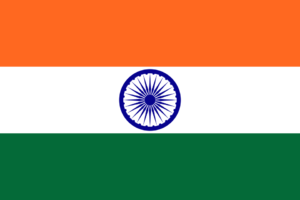
description: three equal horizontal bands of saffron (top), white, and green, with a blue chakra (24-spoked wheel) centered in the white band
meaning: saffron stands for courage, sacrifice, and the spirit of renunciation; white for purity and truth; green for faith and fertility; the chakra symbolizes the wheel of life in movement and death in stagnation
note: note: similar to the flag of Niger, which has a small orange disk centered in the white band
meaning: saffron stands for courage, sacrifice, and the spirit of renunciation; white for purity and truth; green for faith and fertility; the chakra symbolizes the wheel of life in movement and death in stagnation
note: note: similar to the flag of Niger, which has a small orange disk centered in the white band
National symbol(s)
the Lion Capital of Ashoka, which depicts four Asiatic lions standing back-to-back and mounted on a circular abacus (official); Bengal tiger and lotus flower (traditional)
National color(s)
saffron, white, green
National anthem(s)
title: "Jana-Gana-Mana" (Thou Art the Ruler of the Minds of All People)
lyrics/music: Rabindranath TAGORE
history: adopted 1950; Rabindranath TAGORE, a Nobel laureate, also wrote Bangladesh's national anthem
Reference: 1950lyrics/music: Rabindranath TAGORE
history: adopted 1950; Rabindranath TAGORE, a Nobel laureate, also wrote Bangladesh's national anthem
National heritage
total World Heritage Sites: 44 (36 cultural, 7 natural, 1 mixed)
selected World Heritage Site locales: Taj Mahal (c); Agra Fort (c); Elphanta Caves (c); Hill Forts of Rajasthan (c); Sundarbans National Park (n); Rock Shelters of Bhimbetka (c); Champaner-Pavagadh Archaeological Park (c); Jaipur (c); Mahabodhi Temple Complex at Bodh Gaya (c); Manas Wildlife Sanctuary (n); Nanda Devi and Valley of Flowers National Parks (n); Khangchendzonga National Park (m); Group of Monuments at Mahabalipuram (c); Sun Temple, Konârak (c); Kaziranga National Park (n); Churches and Convents of Goa (c); Great Living Chola Temples (c); Group of Monuments at Pattadakal (c); Buddhist Monuments at Sanchi (c); Humayun's Tomb, Delhi (c); Qutb Minar and its Monuments, Delhi (c); Great Himalayan National Park Conservation Area (n); Rani-ki-Vav (the Queen’s Stepwell) at Patan, Gujarat (c); Archaeological Site of Nalanda Mahavihara at Nalanda, Bihar (c); Historic City of Ahmadabad (c); Victorian Gothic and Art Deco Ensembles of Mumbai (c); Jaipur City, Rajasthan (c); Kakatiya Rudreshwara (Ramappa) Temple, Telangana (c); Moidams – the Mound-Burial System of the Ahom Dynasty (c); Maratha Military Landscapes of India (c)
selected World Heritage Site locales: Taj Mahal (c); Agra Fort (c); Elphanta Caves (c); Hill Forts of Rajasthan (c); Sundarbans National Park (n); Rock Shelters of Bhimbetka (c); Champaner-Pavagadh Archaeological Park (c); Jaipur (c); Mahabodhi Temple Complex at Bodh Gaya (c); Manas Wildlife Sanctuary (n); Nanda Devi and Valley of Flowers National Parks (n); Khangchendzonga National Park (m); Group of Monuments at Mahabalipuram (c); Sun Temple, Konârak (c); Kaziranga National Park (n); Churches and Convents of Goa (c); Great Living Chola Temples (c); Group of Monuments at Pattadakal (c); Buddhist Monuments at Sanchi (c); Humayun's Tomb, Delhi (c); Qutb Minar and its Monuments, Delhi (c); Great Himalayan National Park Conservation Area (n); Rani-ki-Vav (the Queen’s Stepwell) at Patan, Gujarat (c); Archaeological Site of Nalanda Mahavihara at Nalanda, Bihar (c); Historic City of Ahmadabad (c); Victorian Gothic and Art Deco Ensembles of Mumbai (c); Jaipur City, Rajasthan (c); Kakatiya Rudreshwara (Ramappa) Temple, Telangana (c); Moidams – the Mound-Burial System of the Ahom Dynasty (c); Maratha Military Landscapes of India (c)
Government & Official Links
| Institution | Official website | X / Twitter | Verification |
|---|---|---|---|
| India official website | Official website | — | Reported · source Checked September 20, 2026 |
Institutional accounts only; personal accounts of political office-holders are excluded.
Legislature & Elections
Legislature
| Name | Chamber | Seats | Electoral system |
|---|---|---|---|
| Parliament of India | — | — | — |
Economy
Economic overview
largest South Asian economy; strong, sustained GDP growth led by technology and service sectors, foreign investment, and improved regulatory framework; high poverty rate and income inequality; initiatives on infrastructure development, digitization, manufacturing, and financial access
Real GDP (purchasing power parity)
Real GDP (purchasing power parity) 2024: $14.244 trillion (2024 est.)
Real GDP (purchasing power parity) 2023: $13.377 trillion (2023 est.)
Real GDP (purchasing power parity) 2022: $12.251 trillion (2022 est.)
note: note: data in 2021 dollars
Reference: 2024, 2023, 2022, 2021Real GDP (purchasing power parity) 2023: $13.377 trillion (2023 est.)
Real GDP (purchasing power parity) 2022: $12.251 trillion (2022 est.)
note: note: data in 2021 dollars
Real GDP per capita
Real GDP per capita 2024: $9,800 (2024 est.)
Real GDP per capita 2023: $9,300 (2023 est.)
Real GDP per capita 2022: $8,600 (2022 est.)
note: note: data in 2021 dollars
Reference: 2024, 2023, 2022, 2021Real GDP per capita 2023: $9,300 (2023 est.)
Real GDP per capita 2022: $8,600 (2022 est.)
note: note: data in 2021 dollars
GDP - composition, by sector of origin
agriculture: 16.4% (2024 est.)
industry: 24.5% (2024 est.)
services: 49.9% (2024 est.)
note: note: figures may not total 100% due to non-allocated consumption not captured in sector-reported data
Reference: 2024industry: 24.5% (2024 est.)
services: 49.9% (2024 est.)
note: note: figures may not total 100% due to non-allocated consumption not captured in sector-reported data
GDP - composition, by end use
household consumption: 61.5% (2024 est.)
government consumption: 10.1% (2024 est.)
investment in fixed capital: 29.6% (2024 est.)
investment in inventories: 3% (2024 est.)
exports of goods and services: 21.2% (2024 est.)
imports of goods and services: -23.5% (2024 est.)
note: note: figures may not total 100% due to rounding or gaps in data collection
Reference: 2024government consumption: 10.1% (2024 est.)
investment in fixed capital: 29.6% (2024 est.)
investment in inventories: 3% (2024 est.)
exports of goods and services: 21.2% (2024 est.)
imports of goods and services: -23.5% (2024 est.)
note: note: figures may not total 100% due to rounding or gaps in data collection
Agricultural products
sugarcane, rice, milk, wheat, bison milk, potatoes, vegetables, maize, bananas, onions (2023)
note: note: top ten agricultural products based on tonnage
Reference: 2023note: note: top ten agricultural products based on tonnage
Industries
textiles, chemicals, food processing, steel, transportation equipment, cement, mining, petroleum, machinery, software, pharmaceuticals
Industrial production growth rate
5.6% (2024 est.)
note: note: annual % change in industrial value added based on constant local currency
Reference: 2024note: note: annual % change in industrial value added based on constant local currency
Labor force
607.691 million (2024 est.)
note: note: number of people ages 15 or older who are employed or seeking work
Reference: 2024note: note: number of people ages 15 or older who are employed or seeking work
Youth unemployment rate (ages 15-24)
total: 16% (2024 est.)
male: 15.5% (2024 est.)
female: 17.6% (2024 est.)
note: note: % of labor force ages 15-24 seeking employment
Reference: 2024male: 15.5% (2024 est.)
female: 17.6% (2024 est.)
note: note: % of labor force ages 15-24 seeking employment
Gini Index coefficient - distribution of family income
Gini Index coefficient - distribution of family income 2022: 25.5 (2022 est.)
note: note: index (0-100) of income distribution; higher values represent greater inequality
Reference: 2022note: note: index (0-100) of income distribution; higher values represent greater inequality
Average household expenditures
on food: 29.9% of household expenditures (2023 est.)
on alcohol and tobacco: 2% of household expenditures (2023 est.)
Reference: 2023on alcohol and tobacco: 2% of household expenditures (2023 est.)
Household income or consumption by percentage share
lowest 10%: 4.5% (2022 est.)
highest 10%: 22.1% (2022 est.)
note: note: % share of income accruing to lowest and highest 10% of population
Reference: 2022highest 10%: 22.1% (2022 est.)
note: note: % share of income accruing to lowest and highest 10% of population
Remittances
Remittances 2024: 3.5% of GDP (2024 est.)
Remittances 2023: 3.3% of GDP (2023 est.)
Remittances 2022: 3.3% of GDP (2022 est.)
note: note: personal transfers and compensation between resident and non-resident individuals/households/entities
Reference: 2024, 2023, 2022Remittances 2023: 3.3% of GDP (2023 est.)
Remittances 2022: 3.3% of GDP (2022 est.)
note: note: personal transfers and compensation between resident and non-resident individuals/households/entities
Budget
revenues: $311.824 billion (2022 est.)
expenditures: $486.598 billion (2022 est.)
note: note: central government revenues and expenses (excluding grants/extrabudgetary units/social security funds) converted to US dollars at average official exchange rate for year indicated
Reference: 2022expenditures: $486.598 billion (2022 est.)
note: note: central government revenues and expenses (excluding grants/extrabudgetary units/social security funds) converted to US dollars at average official exchange rate for year indicated
Public debt
Public debt 2018: 46.5% of GDP (2018 est.)
note: note: central government debt as a % of GDP
Reference: 2018note: note: central government debt as a % of GDP
Taxes and other revenues
6.7% (of GDP) (2022 est.)
note: note: central government tax revenue as a % of GDP
Reference: 2022note: note: central government tax revenue as a % of GDP
Current account balance
Current account balance 2024: -$32.428 billion (2024 est.)
Current account balance 2023: -$31.962 billion (2023 est.)
Current account balance 2022: -$79.051 billion (2022 est.)
note: note: balance of payments - net trade and primary/secondary income in current dollars
Reference: 2024, 2023, 2022Current account balance 2023: -$31.962 billion (2023 est.)
Current account balance 2022: -$79.051 billion (2022 est.)
note: note: balance of payments - net trade and primary/secondary income in current dollars
Exports
Exports 2024: $822.046 billion (2024 est.)
Exports 2023: $773.177 billion (2023 est.)
Exports 2022: $767.643 billion (2022 est.)
note: note: balance of payments - exports of goods and services in current dollars
Reference: 2024, 2023, 2022Exports 2023: $773.177 billion (2023 est.)
Exports 2022: $767.643 billion (2022 est.)
note: note: balance of payments - exports of goods and services in current dollars
Exports - partners
USA 19%, UAE 7%, China 4%, Germany 3%, UK 3% (2023)
note: note: top five export partners based on percentage share of exports
Reference: 2023note: note: top five export partners based on percentage share of exports
Exports - commodities
refined petroleum, packaged medicine, diamonds, broadcasting equipment, garments (2023)
note: note: top five export commodities based on value in dollars
Reference: 2023note: note: top five export commodities based on value in dollars
Imports
Imports 2024: $923.081 billion (2024 est.)
Imports 2023: $859.507 billion (2023 est.)
Imports 2022: $902.304 billion (2022 est.)
note: note: balance of payments - imports of goods and services in current dollars
Reference: 2024, 2023, 2022Imports 2023: $859.507 billion (2023 est.)
Imports 2022: $902.304 billion (2022 est.)
note: note: balance of payments - imports of goods and services in current dollars
Imports - partners
China 19%, Russia 10%, USA 6%, UAE 6%, Saudi Arabia 5% (2023)
note: note: top five import partners based on percentage share of imports
Reference: 2023note: note: top five import partners based on percentage share of imports
Imports - commodities
crude petroleum, gold, coal, natural gas, integrated circuits (2023)
note: note: top five import commodities based on value in dollars
Reference: 2023note: note: top five import commodities based on value in dollars
Reserves of foreign exchange and gold
Reserves of foreign exchange and gold 2024: $643.043 billion (2024 est.)
Reserves of foreign exchange and gold 2023: $627.793 billion (2023 est.)
Reserves of foreign exchange and gold 2022: $567.298 billion (2022 est.)
note: note: holdings of gold (year-end prices)/foreign exchange/special drawing rights in current dollars
Reference: 2024, 2023, 2022Reserves of foreign exchange and gold 2023: $627.793 billion (2023 est.)
Reserves of foreign exchange and gold 2022: $567.298 billion (2022 est.)
note: note: holdings of gold (year-end prices)/foreign exchange/special drawing rights in current dollars
Debt - external
Debt - external 2023: $212.728 billion (2023 est.)
note: note: present value of external debt in current US dollars
Reference: 2023note: note: present value of external debt in current US dollars
Exchange rates
Currency: Indian rupees (INR) per US dollar -
Exchange rates 2024: 83.669 (2024 est.)
Exchange rates 2023: 82.599 (2023 est.)
Exchange rates 2022: 78.604 (2022 est.)
Exchange rates 2021: 73.918 (2021 est.)
Exchange rates 2020: 74.1 (2020 est.)
Reference: 2024, 2023, 2022, 2021Exchange rates 2024: 83.669 (2024 est.)
Exchange rates 2023: 82.599 (2023 est.)
Exchange rates 2022: 78.604 (2022 est.)
Exchange rates 2021: 73.918 (2021 est.)
Exchange rates 2020: 74.1 (2020 est.)
Trade
Current account balance
Current account balance 2024: -$32.428 billion (2024 est.)
Current account balance 2023: -$31.962 billion (2023 est.)
Current account balance 2022: -$79.051 billion (2022 est.)
note: note: balance of payments - net trade and primary/secondary income in current dollars
Reference: 2024, 2023, 2022Current account balance 2023: -$31.962 billion (2023 est.)
Current account balance 2022: -$79.051 billion (2022 est.)
note: note: balance of payments - net trade and primary/secondary income in current dollars
Exports
Exports 2024: $822.046 billion (2024 est.)
Exports 2023: $773.177 billion (2023 est.)
Exports 2022: $767.643 billion (2022 est.)
note: note: balance of payments - exports of goods and services in current dollars
Reference: 2024, 2023, 2022Exports 2023: $773.177 billion (2023 est.)
Exports 2022: $767.643 billion (2022 est.)
note: note: balance of payments - exports of goods and services in current dollars
Exports - partners
USA 19%, UAE 7%, China 4%, Germany 3%, UK 3% (2023)
note: note: top five export partners based on percentage share of exports
Reference: 2023note: note: top five export partners based on percentage share of exports
Exports - commodities
refined petroleum, packaged medicine, diamonds, broadcasting equipment, garments (2023)
note: note: top five export commodities based on value in dollars
Reference: 2023note: note: top five export commodities based on value in dollars
Imports
Imports 2024: $923.081 billion (2024 est.)
Imports 2023: $859.507 billion (2023 est.)
Imports 2022: $902.304 billion (2022 est.)
note: note: balance of payments - imports of goods and services in current dollars
Reference: 2024, 2023, 2022Imports 2023: $859.507 billion (2023 est.)
Imports 2022: $902.304 billion (2022 est.)
note: note: balance of payments - imports of goods and services in current dollars
Imports - partners
China 19%, Russia 10%, USA 6%, UAE 6%, Saudi Arabia 5% (2023)
note: note: top five import partners based on percentage share of imports
Reference: 2023note: note: top five import partners based on percentage share of imports
Imports - commodities
crude petroleum, gold, coal, natural gas, integrated circuits (2023)
note: note: top five import commodities based on value in dollars
Reference: 2023note: note: top five import commodities based on value in dollars
Energy & Resources
Electricity
installed generating capacity: 499.136 million kW (2023 est.)
consumption: 1.5 trillion kWh (2023 est.)
exports: 9.529 billion kWh (2023 est.)
imports: 7.843 billion kWh (2023 est.)
transmission/distribution losses: 303.066 billion kWh (2023 est.)
Reference: 2023consumption: 1.5 trillion kWh (2023 est.)
exports: 9.529 billion kWh (2023 est.)
imports: 7.843 billion kWh (2023 est.)
transmission/distribution losses: 303.066 billion kWh (2023 est.)
Electricity generation sources
fossil fuels: 75.5% of total installed capacity (2023 est.)
nuclear: 2.7% of total installed capacity (2023 est.)
solar: 6.6% of total installed capacity (2023 est.)
wind: 5.1% of total installed capacity (2023 est.)
hydroelectricity: 8.2% of total installed capacity (2023 est.)
biomass and waste: 1.9% of total installed capacity (2023 est.)
Reference: 2023nuclear: 2.7% of total installed capacity (2023 est.)
solar: 6.6% of total installed capacity (2023 est.)
wind: 5.1% of total installed capacity (2023 est.)
hydroelectricity: 8.2% of total installed capacity (2023 est.)
biomass and waste: 1.9% of total installed capacity (2023 est.)
Nuclear energy
Number of operational nuclear reactors: 20 (2025)
Number of nuclear reactors under construction: 7 (2025)
Net capacity of operational nuclear reactors: 6.92GW (2025 est.)
Percent of total electricity production: 3.1% (2023 est.)
Reference: 2025, 2023Number of nuclear reactors under construction: 7 (2025)
Net capacity of operational nuclear reactors: 6.92GW (2025 est.)
Percent of total electricity production: 3.1% (2023 est.)
Coal
production: 1.02 billion metric tons (2023 est.)
consumption: 1.262 billion metric tons (2023 est.)
exports: 1.632 million metric tons (2023 est.)
imports: 243.488 million metric tons (2023 est.)
proven reserves: 127.727 billion metric tons (2023 est.)
Reference: 2023consumption: 1.262 billion metric tons (2023 est.)
exports: 1.632 million metric tons (2023 est.)
imports: 243.488 million metric tons (2023 est.)
proven reserves: 127.727 billion metric tons (2023 est.)
Petroleum
total petroleum production: 822,000 bbl/day (2023 est.)
refined petroleum consumption: 5.271 million bbl/day (2023 est.)
crude oil estimated reserves: 4.605 billion barrels (2021 est.)
Reference: 2023, 2021refined petroleum consumption: 5.271 million bbl/day (2023 est.)
crude oil estimated reserves: 4.605 billion barrels (2021 est.)
Natural gas
production: 35.168 billion cubic meters (2023 est.)
consumption: 62.196 billion cubic meters (2023 est.)
exports: 91.921 million cubic meters (2019 est.)
imports: 29.337 billion cubic meters (2023 est.)
proven reserves: 1.381 trillion cubic meters (2021 est.)
Reference: 2023, 2021, 2019consumption: 62.196 billion cubic meters (2023 est.)
exports: 91.921 million cubic meters (2019 est.)
imports: 29.337 billion cubic meters (2023 est.)
proven reserves: 1.381 trillion cubic meters (2021 est.)
Energy consumption per capita
Total energy consumption per capita 2023: 25.179 million Btu/person (2023 est.)
Reference: 2023Infrastructure
Telephones - fixed lines
total subscriptions: 27.455 million (2022 est.)
subscriptions per 100 inhabitants: 2 (2023 est.)
Reference: 2023, 2022subscriptions per 100 inhabitants: 2 (2023 est.)
Telephones - mobile cellular
total subscriptions: 1.14 billion (2022 est.)
subscriptions per 100 inhabitants: 81 (2022 est.)
Reference: 2022subscriptions per 100 inhabitants: 81 (2022 est.)
Broadband - fixed subscriptions
total: 39.3 million (2023 est.)
subscriptions per 100 inhabitants: 2 (2022 est.)
Reference: 2023, 2022subscriptions per 100 inhabitants: 2 (2022 est.)
Health
Maternal mortality ratio
80 deaths/100,000 live births (2023 est.)
Reference: 2023Health expenditure
Health expenditure (as % of GDP): 3.3% of GDP (2021)
Health expenditure (as % of national budget): 4.5% of national budget (2022 est.)
Reference: 2022, 2021Health expenditure (as % of national budget): 4.5% of national budget (2022 est.)
Physician density
0.72 physicians/1,000 population (2020)
Reference: 2020Hospital bed density
1.6 beds/1,000 population (2021 est.)
Reference: 2021Obesity - adult prevalence rate
3.9% (2016)
Reference: 2016Tobacco use
total: 21.8% (2025 est.)
male: 34.1% (2025 est.)
female: 8.9% (2025 est.)
male: 34.1% (2025 est.)
female: 8.9% (2025 est.)
Education
School life expectancy (primary to tertiary education)
total: 13 years (2024 est.)
male: 13 years (2024 est.)
female: 13 years (2024 est.)
Reference: 2024male: 13 years (2024 est.)
female: 13 years (2024 est.)
Rights, Freedoms & Society
Press & Media Freedom
V-Dem expert-coded/modelled source measures. Knelstrom does not create a press-freedom ranking or composite score.
LGBTQ+ Rights & Law
Concrete legal-status fields only; Knelstrom does not generate an LGBTQ rights score or country ranking.
Source: Wikipedia — LGBTQ rights by country or territory (CC BY-SA 4.0). Community-edited legal-status summary; retrieved by Knelstrom and not legal advice.
Crime & Justice
Legal system
common law system based on the English model; separate personal law codes apply to Muslims, Christians, and Hindus; judicial review of legislative acts
Judicial branch
highest court(s): Supreme Court (consists of 28 judges, including the chief justice)
judge selection and term of office: justices appointed by the president to serve until age 65
subordinate courts: High Courts; District Courts; Labour Court
judge selection and term of office: justices appointed by the president to serve until age 65
subordinate courts: High Courts; District Courts; Labour Court
Military & Security
Military and security forces
Indian Armed Forces (IAF): Army, Navy, Air Force, Coast Guard
Ministry of Home Affairs: Central Police Organization, Central Armed Police Forces (includes Assam Rifles, Border Security Force, Central Industrial Security Force, Central Reserve Police Force, Indo-Tibetan Border Police, National Security Guards, Sashastra Seema Bal) (2025)
note: note 1: the Border Security Force (BSF) is responsible for the Indo-Pakistan and Indo-Bangladesh borders; the Sashastra Seema Bal (SSB or Armed Border Force) guards the Indo-Nepal and Indo-Bhutan borders
note 2: the Central Reserve Police Force (CRPF) includes a Rapid Reaction Force (RAF) for riot control and the Commando Battalion for Resolute Action (COBRA) for counter-insurgency operations
note 3: the Assam Rifles are under the administrative control of the Ministry of Home Affairs, while operational control falls under the Ministry of Defense (specifically the Indian Army)
Ministry of Home Affairs: Central Police Organization, Central Armed Police Forces (includes Assam Rifles, Border Security Force, Central Industrial Security Force, Central Reserve Police Force, Indo-Tibetan Border Police, National Security Guards, Sashastra Seema Bal) (2025)
note: note 1: the Border Security Force (BSF) is responsible for the Indo-Pakistan and Indo-Bangladesh borders; the Sashastra Seema Bal (SSB or Armed Border Force) guards the Indo-Nepal and Indo-Bhutan borders
note 2: the Central Reserve Police Force (CRPF) includes a Rapid Reaction Force (RAF) for riot control and the Commando Battalion for Resolute Action (COBRA) for counter-insurgency operations
note 3: the Assam Rifles are under the administrative control of the Ministry of Home Affairs, while operational control falls under the Ministry of Defense (specifically the Indian Army)
Military expenditures
Military Expenditures 2024: 2% of GDP (2024 est.)
Military Expenditures 2023: 2.3% of GDP (2023 est.)
Military Expenditures 2022: 2.1% of GDP (2022 est.)
Military Expenditures 2021: 2.2% of GDP (2021 est.)
Military Expenditures 2020: 2.5% of GDP (2020 est.)
Reference: 2024, 2023, 2022, 2021Military Expenditures 2023: 2.3% of GDP (2023 est.)
Military Expenditures 2022: 2.1% of GDP (2022 est.)
Military Expenditures 2021: 2.2% of GDP (2021 est.)
Military Expenditures 2020: 2.5% of GDP (2020 est.)
Military and security service personnel strengths
information varies; approximately 1.5 million active Indian Armed Forces, including about 1.25 million in the Army (2025)
Military equipment inventories and acquisitions
much of the military's inventory consists of Russian- and Soviet-origin equipment along with a smaller, but growing mix of Western and domestically produced arms; Russia continues to be the leading provider of arms to India, although in recent years India has increased acquisitions from other suppliers, including France, Israel, and the US; India's defense industry is capable of producing a range of air, land, missile, and naval weapons systems for both domestic use and export; it also produces weapons systems under license (2024)
Reference: 2024Military service age and obligation
ages vary by service, but generally 16.5-27 years of age for voluntary military service for men and women; no conscription (2023)
note: note 1: in 2022, the Indian Government began recruiting men aged 17.5-21 annually to serve on 4-year contracts; at the end of their tenure, 25% would be retained for longer terms of service, while the remainder would be forced to leave the military, although some of those leaving would be eligible to serve in the Coast Guard, the Merchant Navy, civilian positions in the Ministry of Defense, and in the paramilitary forces of the Ministry of Home Affairs
note 2: as of 2023, women made up less than 1% of the Army, about 1% of the Air Force, and about 6% of the Navy
note 3: the Indian military accepts citizens of Nepal and Bhutan; descendants of refugees from Tibet who arrived before 1962 and have resided permanently in India; peoples of Indian origin from nations such as Burma, the Democratic Republic of the Congo, Ethiopia, Kenya, Malawi, Pakistan, Sri Lanka, Tanzania, Uganda, and Vietnam with the intention of permanently settling in India; eligible candidates from “friendly foreign nations” may apply to the Armed Forces Medical Services
note 4: the British began to recruit Nepalese citizens (Gurkhas) into the East India Company Army during the Anglo-Nepalese War (1814-1816), and the Gurkhas subsequently were brought into the British Indian Army; following the partition of India in 1947, an agreement between Nepal, India, and Great Britain allowed for the transfer of the 10 regiments from the British Indian Army to the separate British and Indian armies; six regiments of Gurkhas (aka Gorkhas in India) regiments went to the new Indian Army; a seventh regiment was later added
Reference: 2023, 2022, 1962, 1947note: note 1: in 2022, the Indian Government began recruiting men aged 17.5-21 annually to serve on 4-year contracts; at the end of their tenure, 25% would be retained for longer terms of service, while the remainder would be forced to leave the military, although some of those leaving would be eligible to serve in the Coast Guard, the Merchant Navy, civilian positions in the Ministry of Defense, and in the paramilitary forces of the Ministry of Home Affairs
note 2: as of 2023, women made up less than 1% of the Army, about 1% of the Air Force, and about 6% of the Navy
note 3: the Indian military accepts citizens of Nepal and Bhutan; descendants of refugees from Tibet who arrived before 1962 and have resided permanently in India; peoples of Indian origin from nations such as Burma, the Democratic Republic of the Congo, Ethiopia, Kenya, Malawi, Pakistan, Sri Lanka, Tanzania, Uganda, and Vietnam with the intention of permanently settling in India; eligible candidates from “friendly foreign nations” may apply to the Armed Forces Medical Services
note 4: the British began to recruit Nepalese citizens (Gurkhas) into the East India Company Army during the Anglo-Nepalese War (1814-1816), and the Gurkhas subsequently were brought into the British Indian Army; following the partition of India in 1947, an agreement between Nepal, India, and Great Britain allowed for the transfer of the 10 regiments from the British Indian Army to the separate British and Indian armies; six regiments of Gurkhas (aka Gorkhas in India) regiments went to the new Indian Army; a seventh regiment was later added
Military deployments
1,100 Democratic Republic of the Congo (MONUSCO); 200 Golan Heights (UNDOF); 900 Lebanon (UNIFIL); 2,400 South Sudan (UNMISS); 600 Sudan (UNISFA) (2025)
note: note: India has over 6,000 total military and police personnel deployed on UN missions
note: note: India has over 6,000 total military and police personnel deployed on UN missions
Military - note
the Indian military's primary mission is external/territorial defense while secondary missions include regional power projection, UN peacekeeping deployments, humanitarian operations, and support to internal security forces; it participates in multinational exercises and is one of the world's largest contributors to UN peacekeeping operations
the military's chief external focuses are China and Pakistan; the short 1962 Sino-India War left in place one of the World’s longest disputed international borders--known as the Line of Actual Control (LAC)--resulting in occasional standoffs between Indian and Chinese security forces, including lethal clashes in 1975 and 2020; naval competition and influence in the Indian Ocean is also an area of interest
India has fought four wars and several skirmishes with Pakistan; three of the wars have been over the disputed region of Jammu and Kashmir, the status of which has been unsettled since the UK's 1947 withdrawal and the partition and independence of India and Pakistan; a fragile cease-fire in Kashmir was reached in 2003, revised in 2018, and reaffirmed in 2021, although the militarized Line of Control which serves as the border remains contested, and India has accused Pakistan of backing armed separatists and terrorist organizations in Jammu and Kashmir where Indian military and security forces have conducted counterinsurgency operations since the 1980s; in the Spring of 2025, India held Pakistan responsible for a terrorist attack in India-controlled Kashmir and retaliated, sparking a brief cross-border conflict involving aircraft, artillery, drone, and missile strikes
the Kashmir dispute also includes the Siachen Glacier, located in the Karakoram Mountain Range, which was seized by India in 1984 with Pakistan attempting to retake the area several times between 1985 and 1995; despite the 2003 cease-fire, both sides continue to maintain a permanent military presence there with outposts at altitudes above 20,000 feet (over 6,000 meters) where most casualties are due to extreme weather and the hazards of operating in the high mountain terrain of the world’s highest conflict, including avalanches, exposure, and altitude sickness (2025)
Reference: 2025, 2021, 2020, 2018the military's chief external focuses are China and Pakistan; the short 1962 Sino-India War left in place one of the World’s longest disputed international borders--known as the Line of Actual Control (LAC)--resulting in occasional standoffs between Indian and Chinese security forces, including lethal clashes in 1975 and 2020; naval competition and influence in the Indian Ocean is also an area of interest
India has fought four wars and several skirmishes with Pakistan; three of the wars have been over the disputed region of Jammu and Kashmir, the status of which has been unsettled since the UK's 1947 withdrawal and the partition and independence of India and Pakistan; a fragile cease-fire in Kashmir was reached in 2003, revised in 2018, and reaffirmed in 2021, although the militarized Line of Control which serves as the border remains contested, and India has accused Pakistan of backing armed separatists and terrorist organizations in Jammu and Kashmir where Indian military and security forces have conducted counterinsurgency operations since the 1980s; in the Spring of 2025, India held Pakistan responsible for a terrorist attack in India-controlled Kashmir and retaliated, sparking a brief cross-border conflict involving aircraft, artillery, drone, and missile strikes
the Kashmir dispute also includes the Siachen Glacier, located in the Karakoram Mountain Range, which was seized by India in 1984 with Pakistan attempting to retake the area several times between 1985 and 1995; despite the 2003 cease-fire, both sides continue to maintain a permanent military presence there with outposts at altitudes above 20,000 feet (over 6,000 meters) where most casualties are due to extreme weather and the hazards of operating in the high mountain terrain of the world’s highest conflict, including avalanches, exposure, and altitude sickness (2025)
Nuclear & Strategic Forces
Estimated arsenal figures are open-source assessments rather than official government declarations. “Deployed” follows the source table definition and should not be read as a complete count of every operational non-strategic weapon.
International Relations
International law organization participation
accepts compulsory ICJ jurisdiction with reservations; non-party state to the ICCt
Diplomatic representation in the US
chief of mission: Ambassador Vinay Mohan KWATRA (since 18 September 2024)
chancery: 2107 Massachusetts Avenue NW, Washington, DC 20008
telephone: [1] (202) 939-7000
FAX: [1] (202) 265-4351
email address and website: hoc.washington@mea.gov.in
https://www.indianembassyusa.gov.in/
consulate(s) general: Atlanta, Chicago, Houston, New York, San Francisco, Seattle
Reference: 2024chancery: 2107 Massachusetts Avenue NW, Washington, DC 20008
telephone: [1] (202) 939-7000
FAX: [1] (202) 265-4351
email address and website: hoc.washington@mea.gov.in
https://www.indianembassyusa.gov.in/
consulate(s) general: Atlanta, Chicago, Houston, New York, San Francisco, Seattle
Diplomatic representation from the US
chief of mission: Ambassador-designate Sergio GOR (since 11 October 2025)
embassy: Shantipath, Chanakyapuri, New Delhi - 110021
mailing address: 9000 New Delhi Place, Washington DC 20521-9000
telephone: [91] (11) 2419-8000
FAX: [91] (11) 2419-0017
email address and website: acsnd@state.gov
https://in.usembassy.gov/
consulate(s) general: Chennai (Madras), Hyderabad, Kolkata (Calcutta), Mumbai (Bombay)
embassy: Shantipath, Chanakyapuri, New Delhi - 110021
mailing address: 9000 New Delhi Place, Washington DC 20521-9000
telephone: [91] (11) 2419-8000
FAX: [91] (11) 2419-0017
email address and website: acsnd@state.gov
https://in.usembassy.gov/
consulate(s) general: Chennai (Madras), Hyderabad, Kolkata (Calcutta), Mumbai (Bombay)
International organization participation
ADB, AfDB (nonregional member), Arctic Council (observer), ARF, ASEAN (dialogue partner), BIMSTEC, BIS, BRICS, C, CD, CERN (observer), CICA, CP, EAS, FAO, FATF, G-15, G-20, G-24, G-5, G-77, IAEA, IBRD, ICAO, ICC (national committees), ICRM, IDA, IFAD, IFC, IFRCS, IHO, ILO, IMF, IMO, IMSO, Interpol, IOC, IOM, IPU, ISO, ITSO, ITU, ITUC (NGOs), LAS (observer), MIGA, MINURSO, MONUSCO, NAM, OAS (observer), OECD, OPCW, Pacific Alliance (observer), PCA, PIF (partner), Quad, SAARC, SACEP, SCO (observer), UN, UNCTAD, UNDOF, UNESCO, UNHCR, UNHRC, UNIDO, UNIFIL, UNISFA, UNITAR, UNMISS, UNOCI, UNOOSA, UNSOM, UNWTO, UPU, Wassenaar Arrangement, WCO, WFTU (NGOs), WHO, WIPO, WMO, WTO
Treaties & Organisations
| Organisation | Status | Joined |
|---|---|---|
| BRICS (BRICS) | member | 2009-06-16 |
| Commonwealth of Nations (Commonwealth) | member | 1947-08-15 |
| G20 (G20) | member | — |
| United Nations (UN) | member | 1945-10-30 |
| World Trade Organization (WTO) | member | 1995-01-01 |
International law organization participation
accepts compulsory ICJ jurisdiction with reservations; non-party state to the ICCt
International organization participation
ADB, AfDB (nonregional member), Arctic Council (observer), ARF, ASEAN (dialogue partner), BIMSTEC, BIS, BRICS, C, CD, CERN (observer), CICA, CP, EAS, FAO, FATF, G-15, G-20, G-24, G-5, G-77, IAEA, IBRD, ICAO, ICC (national committees), ICRM, IDA, IFAD, IFC, IFRCS, IHO, ILO, IMF, IMO, IMSO, Interpol, IOC, IOM, IPU, ISO, ITSO, ITU, ITUC (NGOs), LAS (observer), MIGA, MINURSO, MONUSCO, NAM, OAS (observer), OECD, OPCW, Pacific Alliance (observer), PCA, PIF (partner), Quad, SAARC, SACEP, SCO (observer), UN, UNCTAD, UNDOF, UNESCO, UNHCR, UNHRC, UNIDO, UNIFIL, UNISFA, UNITAR, UNMISS, UNOCI, UNOOSA, UNSOM, UNWTO, UPU, Wassenaar Arrangement, WCO, WFTU (NGOs), WHO, WIPO, WMO, WTO
Conflict & Security
Refugees and internally displaced persons
refugees: 250,006 (2024 est.)
IDPs: 642,610 (2024 est.)
stateless persons: 23,262 (2024 est.)
Reference: 2024IDPs: 642,610 (2024 est.)
stateless persons: 23,262 (2024 est.)
Illicit drugs
USG identification: major illicit drug-producing and/or drug-transit country
major precursor-chemical producer (2025)
major precursor-chemical producer (2025)
Terrorist group(s)
al-Qa’ida; al-Qa’ida in the Indian Subcontinent (AQIS); Harakat ul-Mujahidin; Harakat ul-Jihad-i-Islami (HUJI); Hizbul Mujahideen; Indian Mujahedeen; Islamic State of Iraq and ash-Sham (ISIS) – India (ISI); Jaish-e-Mohammed (JeM); Lashkar-e Tayyiba (LeT); Islamic Revolutionary Guard Corps (IRGC)/Qods Force; The Resistance Front (TRF)
note: note: details about the history, aims, leadership, organization, areas of operation, tactics, targets, weapons, size, and sources of support of the group(s) appear(s) in the Terrorism reference guide
note: note: details about the history, aims, leadership, organization, areas of operation, tactics, targets, weapons, size, and sources of support of the group(s) appear(s) in the Terrorism reference guide
Transportation & Logistics
Civil aircraft registration country code prefix
VT
Airports
315 (2025)
Heliports
289 (2025)
Railways
total: 65,554 km (2014)
narrow gauge: 1,604 km (2014) 1.000-m gauge
broad gauge: 63,950 km (2014) (39, 329 km electrified)
Reference: 2014narrow gauge: 1,604 km (2014) 1.000-m gauge
broad gauge: 63,950 km (2014) (39, 329 km electrified)
Merchant marine
total: 1,859 (2023)
by type: bulk carrier 66, container ship 22, general cargo 607, oil tanker 144, other 1020
Reference: 2023by type: bulk carrier 66, container ship 22, general cargo 607, oil tanker 144, other 1020
Ports
total ports: 56 (2024)
large: 4
medium: 4
small: 13
very small: 30
size unknown: 5
ports with oil terminals: 18
key ports: Calcutta, Chennai (Madras), Jawaharlal Nehru Port (Nhava Shiva), Kattupalli Port, Kochi (Cochin), Mumbai (Bombay), New Mangalore, Vishakhapatnam
Reference: 2024large: 4
medium: 4
small: 13
very small: 30
size unknown: 5
ports with oil terminals: 18
key ports: Calcutta, Chennai (Madras), Jawaharlal Nehru Port (Nhava Shiva), Kattupalli Port, Kochi (Cochin), Mumbai (Bombay), New Mangalore, Vishakhapatnam
Environment
Environmental issues
deforestation; soil erosion; overgrazing; desertification; air pollution from industrial effluents and vehicle emissions; water pollution from raw sewage and agricultural pesticides; tap water not potable; growing population overstraining natural resources; biodiversity loss
International environmental agreements
party to: Antarctic-Environmental Protection, Antarctic-Marine Living Resources, Antarctic Treaty, Biodiversity, Climate Change, Climate Change-Kyoto Protocol, Climate Change-Paris Agreement, Desertification, Endangered Species, Environmental Modification, Hazardous Wastes, Law of the Sea, Nuclear Test Ban, Ozone Layer Protection, Ship Pollution, Tropical Timber 2006, Wetlands, Whaling
signed, but not ratified: none of the selected agreements
Reference: 2006signed, but not ratified: none of the selected agreements
Climate
varies from tropical monsoon in south to temperate in north
Land use
agricultural land: 60.1% (2023 est.)
agricultural land: arable land: arable land: 51.8% (2023 est.)
agricultural land: permanent crops: permanent crops: 4.9% (2023 est.)
agricultural land: permanent pasture: permanent pasture: 3.4% (2023 est.)
forest: 24.4% (2023 est.)
other: 15.5% (2023 est.)
Reference: 2023agricultural land: arable land: arable land: 51.8% (2023 est.)
agricultural land: permanent crops: permanent crops: 4.9% (2023 est.)
agricultural land: permanent pasture: permanent pasture: 3.4% (2023 est.)
forest: 24.4% (2023 est.)
other: 15.5% (2023 est.)
Urbanization
urban population: 36.4% of total population (2023)
rate of urbanization: 2.33% annual rate of change (2020-25 est.)
Reference: 2023, 2020rate of urbanization: 2.33% annual rate of change (2020-25 est.)
Carbon dioxide emissions
total emissions: 2.821 billion metric tonnes of CO2 (2023 est.)
from coal and metallurgical coke: 2.054 billion metric tonnes of CO2 (2023 est.)
from petroleum and other liquids: 642.909 million metric tonnes of CO2 (2023 est.)
from consumed natural gas: 124.226 million metric tonnes of CO2 (2023 est.)
Reference: 2023from coal and metallurgical coke: 2.054 billion metric tonnes of CO2 (2023 est.)
from petroleum and other liquids: 642.909 million metric tonnes of CO2 (2023 est.)
from consumed natural gas: 124.226 million metric tonnes of CO2 (2023 est.)
Particulate matter emissions
55.6 micrograms per cubic meter (2019 est.)
Reference: 2019Methane emissions
energy: 8,217.3 kt (2022-2024 est.)
agriculture: 17,971 kt (2019-2021 est.)
waste: 4,773.7 kt (2019-2021 est.)
other: 644.6 kt (2019-2021 est.)
Reference: 2024, 2022, 2021, 2019agriculture: 17,971 kt (2019-2021 est.)
waste: 4,773.7 kt (2019-2021 est.)
other: 644.6 kt (2019-2021 est.)
Waste and recycling
municipal solid waste generated annually: 189.75 million tons (2024 est.)
percent of municipal solid waste recycled: 17.8% (2022 est.)
Reference: 2024, 2022percent of municipal solid waste recycled: 17.8% (2022 est.)
Total water withdrawal
municipal: 56 billion cubic meters (2022 est.)
industrial: 17 billion cubic meters (2022 est.)
agricultural: 688 billion cubic meters (2022 est.)
Reference: 2022industrial: 17 billion cubic meters (2022 est.)
agricultural: 688 billion cubic meters (2022 est.)
Total renewable water resources
1.911 trillion cubic meters (2022 est.)
Reference: 2022Communications & Media
Telephones - fixed lines
total subscriptions: 27.455 million (2022 est.)
subscriptions per 100 inhabitants: 2 (2023 est.)
Reference: 2023, 2022subscriptions per 100 inhabitants: 2 (2023 est.)
Telephones - mobile cellular
total subscriptions: 1.14 billion (2022 est.)
subscriptions per 100 inhabitants: 81 (2022 est.)
Reference: 2022subscriptions per 100 inhabitants: 81 (2022 est.)
Broadcast media
Doordarshan, India's public TV network, has a monopoly on terrestrial broadcasting and operates about 20 national, regional, and local services; a large number of privately owned TV stations are distributed by cable and satellite service providers; cable and satellite TV offer over 850 TV channels; government controls AM radio, with All India Radio operating domestic and external networks; news broadcasts via radio are limited to the All India Radio Network; since 2000, privately owned FM stations have been permitted and have increased rapidly (2020)
Reference: 2020, 2000Internet country code
.in
Internet users
percent of population: 56% (2022 est.)
Reference: 2022Broadband - fixed subscriptions
total: 39.3 million (2023 est.)
subscriptions per 100 inhabitants: 2 (2022 est.)
Reference: 2023, 2022subscriptions per 100 inhabitants: 2 (2022 est.)
Historical Trends
Population
Source: World Bank WDI. Historical observations shown by reference period.
View Population data table
| Period | Value | Source |
|---|---|---|
| 2016 | 1,343,944,296 | world_bank_wdi |
| 2017 | 1,359,657,400 | world_bank_wdi |
| 2018 | 1,374,659,064 | world_bank_wdi |
| 2019 | 1,389,030,312 | world_bank_wdi |
| 2020 | 1,402,617,695 | world_bank_wdi |
| 2021 | 1,414,203,896 | world_bank_wdi |
| 2022 | 1,425,423,212 | world_bank_wdi |
| 2023 | 1,438,069,596 | world_bank_wdi |
| 2024 | 1,450,935,791 | world_bank_wdi |
| 2025 | 1,463,865,525 | world_bank_wdi |
GDP (current US$)
Source: World Bank WDI. Historical observations shown by reference period.
View GDP (current US$) data table
| Period | Value | Source |
|---|---|---|
| 2016 | $2,294,796,885,663 | world_bank_wdi |
| 2017 | $2,651,474,262,756 | world_bank_wdi |
| 2018 | $2,702,929,641,649 | world_bank_wdi |
| 2019 | $2,835,606,256,558 | world_bank_wdi |
| 2020 | $2,674,851,578,587 | world_bank_wdi |
| 2021 | $3,167,270,623,261 | world_bank_wdi |
| 2022 | $3,249,938,492,014 | world_bank_wdi |
| 2023 | $3,500,906,030,645 | world_bank_wdi |
| 2024 | $3,760,813,470,501 | world_bank_wdi |
| 2025 | $3,956,067,115,772 | world_bank_wdi |
International migrant stock (immigrants)
Source: World Bank WDI. Historical observations shown by reference period.
View International migrant stock (immigrants) data table
| Period | Value | Source |
|---|---|---|
| 2020 | 4,929,816 | world_bank_wdi |
| 2024 | 4,796,255 | world_bank_wdi |
International emigrant stock
Source: World Bank WDI. Historical observations shown by reference period.
View International emigrant stock data table
| Period | Value | Source |
|---|---|---|
| 1990 | 6,575,416 | un_migrant_stock_2024 |
| 1995 | 6,900,228 | un_migrant_stock_2024 |
| 2000 | 7,778,792 | un_migrant_stock_2024 |
| 2005 | 9,500,673 | un_migrant_stock_2024 |
| 2010 | 12,350,515 | un_migrant_stock_2024 |
| 2015 | 15,277,263 | un_migrant_stock_2024 |
| 2020 | 16,532,761 | un_migrant_stock_2024 |
| 2024 | 18,533,845 | un_migrant_stock_2024 |
Net migration
Source: World Bank WDI. Historical observations shown by reference period.
View Net migration data table
| Period | Value | Source |
|---|---|---|
| 2016 | 81,248 | world_bank_wdi |
| 2017 | -251,642 | world_bank_wdi |
| 2018 | -589,794 | world_bank_wdi |
| 2019 | -978,969 | world_bank_wdi |
| 2020 | -73,806 | world_bank_wdi |
| 2021 | -348,916 | world_bank_wdi |
| 2022 | -1,353,478 | world_bank_wdi |
| 2023 | -979,179 | world_bank_wdi |
| 2024 | -630,830 | world_bank_wdi |
| 2025 | -495,753 | world_bank_wdi |
Sources & Methodology
Current statistical observations include their reference period and provenance. Reference fields from approved source datasets are attributed below. Missing information is left unknown rather than inferred.
| Indicator | Value | Period | Source | Status |
|---|---|---|---|---|
| Population | 1,463,865,525 | 2025 | World Bank — World Development Indicators | Verified |
| UN Population Division population estimate | 1,476,625,577 | 2026 | UN Population Division Data Portal | Estimated |
| Wikidata population (fallback) | 1,326,093,247 | 2020 | Wikidata | Reported |
| International migrant stock (immigrants) | 4,796,255 | 2024 | World Bank — World Development Indicators | Verified |
| International migrant stock | 0.3% | 2024 | World Bank — World Development Indicators | Verified |
| International emigrant stock | 18,533,845 | 2024 | UN DESA International Migrant Stock 2024 | Estimated |
| Net migration | -495,753 | 2025 | World Bank — World Development Indicators | Verified |
| Refugees hosted | 238,643 | 2025 | UNHCR Refugee Population Statistics | Verified |
| Asylum seekers hosted | 15,075 | 2025 | UNHCR Refugee Population Statistics | Verified |
| Refugees from this country | 42,610 | 2025 | World Bank — World Development Indicators | Verified |
| Asylum seekers from this country | 181,121 | 2025 | World Bank — World Development Indicators | Verified |
| Freedom of expression & alternative information index | 0.458 | 2025 | Varieties of Democracy (V-Dem) Country-Year Dataset v16 | Estimated |
| Government censorship effort — media | -0.258 | 2025 | Varieties of Democracy (V-Dem) Country-Year Dataset v16 | Estimated |
| Harassment of journalists | -0.188 | 2025 | Varieties of Democracy (V-Dem) Country-Year Dataset v16 | Estimated |
| Print/broadcast media critical of government | -0.195 | 2025 | Varieties of Democracy (V-Dem) Country-Year Dataset v16 | Estimated |
| Range of perspectives in major media | 0.513 | 2025 | Varieties of Democracy (V-Dem) Country-Year Dataset v16 | Estimated |
| Media bias | 0.176 | 2025 | Varieties of Democracy (V-Dem) Country-Year Dataset v16 | Estimated |
| Media self-censorship | -0.102 | 2025 | Varieties of Democracy (V-Dem) Country-Year Dataset v16 | Estimated |
| Same-sex sexual activity | Yes Yes Legal since 2009–2013, again since 2018 | current | Wikipedia — LGBTQ rights by country or territory | Reported |
| Recognition of same-sex relationships | No No | current | Wikipedia — LGBTQ rights by country or territory | Reported |
| Same-sex marriage | No No | current | Wikipedia — LGBTQ rights by country or territory | Reported |
| Same-sex adoption | No No | current | Wikipedia — LGBTQ rights by country or territory | Reported |
| Open military service | No No | current | Wikipedia — LGBTQ rights by country or territory | Reported |
| Sexual-orientation anti-discrimination law | Yes Yes Bans some anti-gay discrimination | current | Wikipedia — LGBTQ rights by country or territory | Reported |
| Gender identity / expression law | Yes Yes A third gender option (hijra) besides male and female is available; transgender people have a constitutional right to change gender, only after medical/surgical intervention | current | Wikipedia — LGBTQ rights by country or territory | Reported |
| Nuclear weapons status | Nuclear-armed state outside the NPT | 2026 | Wikipedia — nuclear-armed states overview (2026 snapshot) | Reported |
| Estimated military nuclear stockpile | 190 | 2026 | Wikipedia — nuclear-armed states overview (2026 snapshot) | Estimated |
| Estimated deployed nuclear warheads | 12 | 2026 | Wikipedia — nuclear-armed states overview (2026 snapshot) | Estimated |
| Nuclear delivery configuration | Nuclear triad | 2026 | Wikipedia — nuclear-armed states overview (2026 snapshot) | Estimated |
| First nuclear test | 18 May 1974 | 2026 | Wikipedia — nuclear-armed states overview (2026 snapshot) | Reported |
| Nuclear tests | 6 | 2026 | Wikipedia — nuclear-armed states overview (2026 snapshot) | Estimated |
| GDP (current US$) | $3,956,067,115,772 | 2025 | World Bank — World Development Indicators | Verified |
| GDP per capita (current US$) | $2,702 | 2025 | World Bank — World Development Indicators | Verified |
| GDP growth | 7.6% | 2025 | World Bank — World Development Indicators | Verified |
| Inflation, consumer prices | 2.4% | 2025 | World Bank — World Development Indicators | Verified |
| Unemployment | 4.2% | 2025 | World Bank — World Development Indicators | Verified |
| Income level | Lower middle income | current | World Bank — World Development Indicators | Verified |
| Life expectancy at birth | 72.2 years | 2024 | World Bank — World Development Indicators | Verified |
| Fertility rate | 2.0 | 2024 | World Bank — World Development Indicators | Verified |
| Urban population | 35.7% | 2025 | World Bank — World Development Indicators | Verified |
| Individuals using the Internet | 70.0% | 2025 | World Bank — World Development Indicators | Verified |
| Exports of goods and services | 22.3% | 2025 | World Bank — World Development Indicators | Verified |
| Imports of goods and services | 24.0% | 2025 | World Bank — World Development Indicators | Verified |
| Trade | 46.3% | 2025 | World Bank — World Development Indicators | Verified |
| Adult literacy rate | 78.2% | 2024 | World Bank — World Development Indicators | Verified |
| Secondary school enrolment, gross | 79.6% | 2025 | World Bank — World Development Indicators | Verified |
| Government education expenditure | 4.1% | 2022 | World Bank — World Development Indicators | Verified |
| Access to electricity | 99.9% | 2024 | World Bank — World Development Indicators | Verified |
| Electric power consumption | 1,182 kWh/person | 2023 | World Bank — World Development Indicators | Verified |
| Renewable energy consumption | 34.9% | 2021 | World Bank — World Development Indicators | Verified |
| Current health expenditure | 3.3% | 2023 | World Bank — World Development Indicators | Verified |
| Infant mortality rate | 23.3 per 1,000 | 2024 | World Bank — World Development Indicators | Verified |
| Forest area | 24.5% | 2023 | World Bank — World Development Indicators | Verified |
| Mobile cellular subscriptions | 79.4 per 100 | 2024 | World Bank — World Development Indicators | Verified |
| Fixed broadband subscriptions | 3.2 per 100 | 2024 | World Bank — World Development Indicators | Verified |
| Secure Internet servers | 1,212 per million | 2024 | World Bank — World Development Indicators | Verified |
| Latitude | 28.6353° | current | World Bank — World Development Indicators | Verified |
| Longitude | 77.2250° | current | World Bank — World Development Indicators | Verified |
| Latitude (Wikidata) | 22.8000° | current | Wikidata | Reported |
| Longitude (Wikidata) | 83.0000° | current | Wikidata | Reported |
| Form of government | republic, constitutional republic, democratic republic, federal republic | current | Wikidata | Reported |
Data attribution
Credits below are generated from sources actually used by this country profile. Source-specific terms take precedence.
- CIA World Factbook, final 2025 country profile (structured via factbook.json). Accessed September 20, 2026. U.S. Government public-domain data; retained as a reference source where a newer approved field is not available. Source · Terms/licence
- United Nations, Department of Economic and Social Affairs, Population Division, International Migrant Stock 2024; data access/processing via Our World in Data. Accessed September 20, 2026. Underlying UN dataset used under CC BY 3.0 IGO. Source · Terms/licence
- United Nations, Department of Economic and Social Affairs, Population Division, World Population Prospects (WPP indicator 49) Accessed September 19, 2026. Used under CC BY 3.0 IGO; current-year WPP population values are presented as estimates/projections where applicable. Source · Terms/licence
- UNHCR Refugee Population Statistics Database. Accessed October 12, 2026. Used under CC BY 4.0 except where a dataset identifies a different source or licence. Source · Terms/licence
- Varieties of Democracy (V-Dem), Country-Year Dataset v16 (variables: v2mebias, v2mecenefm, v2mecrit, v2meharjrn, v2merange, v2meslfcen, v2x_freexp_altinf) Accessed September 20, 2026. Used under CC BY-SA 4.0; V-Dem measures are expert-coded/modelled and no V-Dem endorsement is implied. Source · Terms/licence
- Wikidata structured data (CC0). Accessed September 20, 2026. Attribution is provided by Knelstrom for provenance although CC0 does not require it. Source · Terms/licence
- Wikipedia, “LGBTQ rights by country or territory” (source revision/data fields: Wikipedia revision 1374406645 — Gender identity / expression law, Wikipedia revision 1374406645 — Open military service, Wikipedia revision 1374406645 — Recognition of same-sex relationships, Wikipedia revision 1374406645 — Same-sex adoption, Wikipedia revision 1374406645 — Same-sex marriage, Wikipedia revision 1374406645 — Same-sex sexual activity, Wikipedia revision 1374406645 — Sexual-orientation anti-discrimination law) Accessed October 18, 2026. Used under CC BY-SA 4.0. Knelstrom changes formatting and presents the imported material as a community-edited legal-status summary, not legal advice or a Knelstrom rights score. Source · Terms/licence
- Wikipedia, “List of states with nuclear weapons”, 2026 nuclear-forces overview (data points: Delivery configuration, Estimated deployed warheads, Estimated military stockpile, First nuclear test, Nuclear status, Nuclear tests) Accessed September 20, 2026. Used under CC BY-SA 4.0. Knelstrom stores concise source-attributed estimates and does not present them as official government arsenal declarations. Source · Terms/licence
- World Bank, World Development Indicators (series: AG.LND.FRST.ZS, country_metadata, EG.ELC.ACCS.ZS, EG.FEC.RNEW.ZS, EG.USE.ELEC.KH.PC, FP.CPI.TOTL.ZG, IT.CEL.SETS.P2, IT.NET.BBND.P2, IT.NET.SECR.P6, IT.NET.USER.ZS, NE.EXP.GNFS.ZS, NE.IMP.GNFS.ZS, NE.TRD.GNFS.ZS, NY.GDP.MKTP.CD, NY.GDP.MKTP.KD.ZG, NY.GDP.PCAP.CD, SE.ADT.LITR.ZS, SE.SEC.ENRR, SE.XPD.TOTL.GD.ZS, SH.XPD.CHEX.GD.ZS, SL.UEM.TOTL.ZS, SM.POP.ASYS.EO, SM.POP.NETM, SM.POP.RHCR.EO, SM.POP.TOTL, SM.POP.TOTL.ZS, SP.DYN.IMRT.IN, SP.DYN.LE00.IN, SP.DYN.TFRT.IN, SP.POP.TOTL, SP.URB.TOTL.IN.ZS) Accessed October 11, 2026. Data used under CC BY 4.0; Knelstrom presentation/formatting may differ from the source. Source · Terms/licence
- Country flag from Wikimedia Commons. https://commons.wikimedia.org/wiki/File%3AFlag_of_India.svg
Knelstrom does not imply endorsement by any listed data provider.
Last automated statistical refresh: 2026-10-19 20:51:55